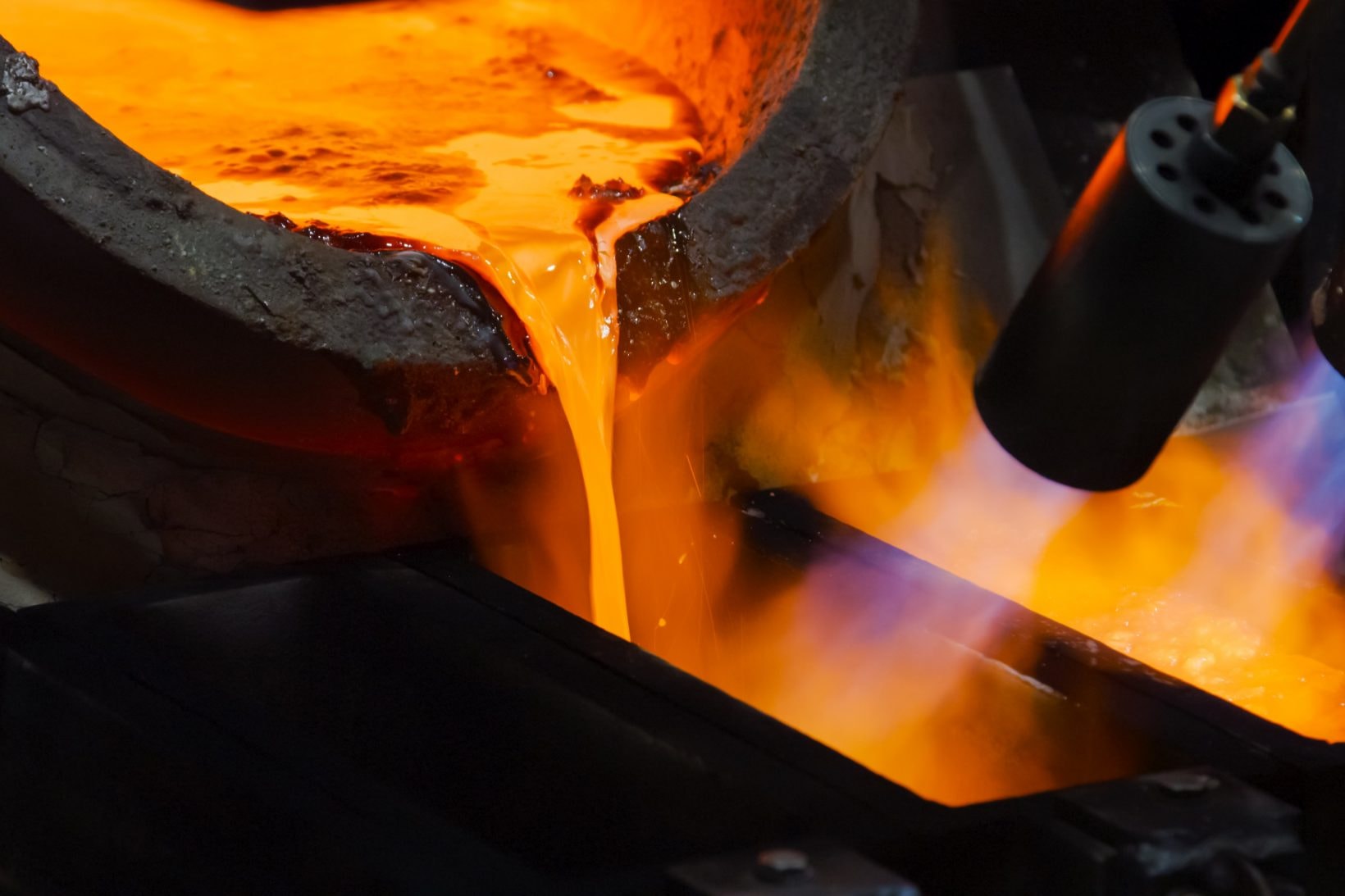
As a global gold hub, Switzerland handles more than half of international gold production and enforces some of the most stringent standards for refining, traceability, and the control of precious metals. As part of a series of exclusive articles on gold, Luxury Tribune offers, in this first part, an in-depth look at this unique system that makes the Swiss hallmark a true passport to international markets.
In Switzerland, the regulation of precious metals is organized around the Central Office for Precious Metals Control (CO-PMC) — which is part of the Federal Office of Customs and Border Security (FOCBS) — and several regional offices (EMK)
52.3%
Percentage of global gold production transiting through Switzerland in 2025
2616
Metric tons of primary (mined) and secondary (recycled) gold imports into Switzerland in 2025
33%
The influx of recycled gold into Switzerland (alongside one-third mined gold and one-third bank gold)
For watch and jewelry manufacturers, going through the Swiss precious metals control offices for official hallmarking and access to the Vienna Convention is almost mandatory (Argor-Heraeus)
Our role is to ensure that consumers who purchase a product in Switzerland are not misled
Laurent Prélaz, expert and manager at the Precious Metals Control Division of the Federal Office of Customs and Border Security
Switzerland plays a central role in the global gold trade, handling approximately 40 to 50 percent of global production. In 2025, imports of primary (mined) and secondary (recycled) gold into Switzerland totaled 2,616 metric tons out of a global total of 5,002 metric tons produced (52.3%). Throughout its history—and due to its shared borders with Italy, among other countries (global gold has long been destined for Italian jewelry manufacturers, particularly in Vicenza and Arezzo)—Switzerland has developed world-renowned expertise in refining. The federal precious metals control offices thus screen incoming shipments, including the Geneva office, located in Cointrin, and the Brügg office, which is dedicated (among other things) to preventing money laundering. The origins of doré bullion (unrefined gold) from sanctioned countries, as well as the hallmarks on watch and jewelry cases, are inspected.
The legislation enforced by Swiss regulatory authorities—which ranges from the oversight of refiners to the hallmarks affixed to items—protects consumers but has also helped forge Switzerland’s reputation in this field, gradually establishing one of the highest quality standards in the world. This strategic screening process effectively determines gold’s access to the global market.
Newsletters
Cet article vous plaît ?
Inscrivez-vous à nos newsletters pour recevoir les dernières publications et analyses selon nos 4 thématiques:
NewsGen ZAnalysesTrends to watch
Switzerland’s Specific Approach to Gold Certification
At the heart of this system, two key players stand out: the central office in Brügg—responsible for overseeing major market players—and the inspection offices, including the one in Geneva—a true interface between the luxury industry and the government. Together, they embody Switzerland’s specific approach to gold certification.
In Brügg, Roger Hafner, head of market oversight at the Central Office for Precious Metals Control (BCMP), and his team focus on “the major players in raw material processing—the refiners,” who are required to comply with both the Precious Metals Control Act and, for some of them, the Anti-Money Laundering Act.
The mandate is clear: to ensure that refiners and certain dealers “do not source materials from illicit sources and that they have a risk management system appropriate to their exposure,” explains Roger Hafner. In practice, the unit conducts annual audits for entities subject to the Anti-Money Laundering Act (AMLA), and audits every two to four years for others. The audits are based on revenue, volumes, client lists, in-depth KYC (know your customer) reviews, and transaction levels.
This is where Switzerland’s unique approach lies: the ability to require traceability up the supply chain, even when gold transits through sensitive hubs. “Even if it transits through Dubai, for example, Swiss businesses must prove that illicit gold cannot enter their material flows,” Hafner continues. Switzerland does not have access to systematic mutual legal assistance agreements with the United Arab Emirates or certain developing countries, but it requires refiners to document mining permits, export documents, on-site visits, and internal due diligence systems aligned with international standards.”
The limitations are acknowledged: “We cannot conduct on-site investigations directly; we must rely on the information received, support from embassies, and informal exchanges with local authorities. Here we are reaching the limits of the system.” Switzerland’s response is to make international guidelines (such as those of the OECD) binding by incorporating them into the revised customs law, and to use Switzerland’s market position as leverage. If a company wants access to the Swiss market—and, by extension, to many third-party markets—it must accept these constraints.
Geneva: the Gateway for Luxury Watches and Jewelry
As the price of gold has risen, the market has attracted all kinds of traders, a number of whom are difficult to trace
Roger Hafner, head of market oversight at the Central Office for the Control of Precious Metals (BCMP)
The Geneva office, one of five inspection offices in Switzerland—four federal and one cantonal—also plays a complementary role: that of a quality control authority focused on articles made of precious metals—watches, cases, bracelets, and jewelry—rather than on unrefined gold.
The head of Saint Bernard (top), often accompanied by the Vienna Convention scales hallmark (bottom): this double hallmark serves as a passport for free circulation in many countries (EMK)
“Our role is to ensure that consumers who buy a product in Switzerland are not misled. When they buy a 750-gold wedding band, they must actually be getting 750-gold and not a metal that is merely gold-plated on the surface,” explains Laurent Prélaz, an expert and manager with the Precious Metals Control division within the Federal Office of Customs and Border Security.
Every item entering the country for commercial purposes is reported in the customs system. The volume is so high that a comprehensive inspection is impossible. Hence the importance of risk analysis, which is integrated at the heart of the Federal Office of Customs and Border Security (OFDF). Precious metals offices feed this system with their own alerts: problematic importers, repeated errors, and sensitive origins. This data is integrated into a rule database that automatically blocks certain shipments upon import.
Newsletters
Cet article vous plaît ?
Inscrivez-vous à nos newsletters pour recevoir les dernières publications et analyses selon nos 4 thématiques:
NewsGen ZAnalysesTrends to watch
In Geneva, there are reportedly 4,000 to 5,000 shipments of precious metal articles per month, the vast majority of which are destined for the luxury sector: watchmaking, jewelry, and fine jewelry. While Zurich handles a much larger volume of packages through the Swiss Post sorting center in Zurich-Mülligen, Geneva accounts for the majority of the value. When shipments are blocked, a second, more detailed screening takes place at the inspection office, based on the expertise of CMP specialists and their experience gained over the years.
Cases of outright fraud remain rare in this channel. The specific Swiss requirements are characterized by a very high standard compared to those of other countries: “Swiss criteria are very high and demanding, and other countries don’t always manage to meet them. Often, a small piece of information is missing—a title designation or a marking detail.” In the vast majority of cases, we offer the option to bring the products into compliance,” explains Laurent Prélaz.
One of the key tools for ensuring this quality is the official Swiss hallmark: the head of Saint Bernard, often supplemented by the scales hallmark of the Vienna Convention. This dual hallmark functions as a passport for free circulation in many countries, allowing the goods to enter without additional inspections. This is one of Switzerland’s major points of differentiation: the ability to transform a very strict national standard into a competitive advantage for its exporters.
Determining the Surface Composition of Alloys Without Damaging the Pieces
When necessary—particularly to meet the stricter requirements of the Vienna Convention—analyses involving the actual material of the jewelry or watch continue to be performed (EMK)
If the item is intended for sale in Switzerland, it must meet the requirements of the LCMP in order to be sold there
Laurent Prélaz, expert and manager at the Precious Metals Control Division of the Federal Office of Customs and Border Security
The strength of Swiss precious metals control also lies in its analytical capabilities. Along with Brügg, the Geneva office is one of only two federal laboratories still active in the field of precious metals. Geneva specializes in gold and is equipped with X-ray fluorescence devices capable of determining the surface composition of alloys without destroying the pieces. When necessary—particularly to meet the stricter requirements of the Vienna Convention—analyses that involve testing the actual material of the jewelry or watch continue to be performed. However, over time, advances in analytical methods have made it possible to reduce the need for such interventions. The offices receive nearly finished pieces—often already set with gemstones—for last-minute hallmarking, whereas the law normally requires submission at an earlier stage of production.
Geneva has therefore increased the number of on-site hallmarking agreements: federal inspectors and sworn assayers (a role whose title and status are unique to Switzerland) visit the workshops of major luxury houses to oversee on-site hallmarking in dedicated facilities equipped with safes containing the official hallmarks, to which only they have access.
Luxury Brands Are Bringing Quality Control In-House
Argor-Heraeus in Mendrisio employs testers certified by the Swiss Confederation and has an internal organizational structure that is independent of financial interests and production (Argor-Heraeus)
One of the most telling examples is that of a major player in the watchmaking industry. This company has its own smelting and analytical capabilities and employs professionals authorized under the legislation governing the control of precious metals. “They have a laboratory that allows them to analyze precious metals and count duly authorized trade assayers among their staff. Despite these capabilities, the company has chosen to resubmit the alloys intended for pieces that will subsequently undergo official hallmarking to the Geneva laboratory,” explains Laurent Prélaz.
This approach is also followed by other major names and, of course, by Ticino refiners, such as Argor-Heraeus in Mendrisio, which employ assayers sworn in by the Swiss Confederation and maintain an internal organizational structure independent of financial interests and production.
What about a jeweler who manufactures outside of Switzerland but wishes to sell their products in Switzerland? When asked about this, Laurent Prélaz replies: “If the piece is intended for sale in Switzerland, it must meet the requirements of the LCMP to be sold there. As for items intended for export, official hallmarking is mandatory for watch cases but optional for jewelry. In practice, however, the vast majority of companies prefer to use official hallmarking for all their precious metal products. The official Swiss and Vienna Convention hallmarks allow them to enter various global markets without additional inspections.” In fact, large corporations today tend to align with the Swiss standard to standardize their supply chains.
What sets Switzerland apart: its ability to demand transparency throughout the supply chain, even when gold passes through sensitive hubs (EMK)
Regarding gold recycling (old jewelry, for example), Brügg notes a surprising stability: about one-third of gold imports into Switzerland consist of recycled gold, alongside one-third from mining and one-third from banks. “We haven’t seen massive growth. There are fluctuations of a few percentage points, but nothing structural.”
Where the trend is clear is among buyers of used precious metals. The surge in the price of gold has attracted new players, some of whom are unscrupulous. The official adds: “With the rise in the price of gold, the market has attracted all kinds of dealers, a number of whom are difficult to trace. The funds used to purchase these used precious metals may come from illicit sources.”
In response to this risk, new regulations have taken effect: as of January 1, 2023—with a transition period through January 1, 2024—any entity purchasing used precious metals intended for smelting, in amounts exceeding 50,000 francs per year, must register and comply with documentation and customer identification requirements. On this point, the regulatory agencies have observed a profound change. “Over the past twenty years, we’ve seen a huge improvement. Dishonest operators no longer feel very comfortable. They’re even starting to report each other.” However, some loopholes remain, particularly with regard to itinerant buyers, who are difficult to trace.
Another source of risk stems from the shift toward online sales. “The big change isn’t the price of gold—it’s the Internet. People can buy any item online without going through a store. On the web, it’s very difficult to know where a company is headquartered or which rules apply.”
Counterfeits: The Saint Bernard Head Hallmark Is the Standard
In Switzerland, when a consumer buys something at a well-established store, they can be fairly certain that the product meets the required standards
Laurent Prélaz, expert and manager at the Precious Metals Control Division of the Federal Office of Customs and Border Security
One of the most telling examples of this system recently came from an auction house that had acquired luxury watches in good faith, convinced of their authenticity, with the intention of reselling them at jewelry auctions in Switzerland. During an inspection, the Geneva office identified very skillfully executed forgeries: “The trained eye of our staff made it possible to determine that the official Swiss hallmark had been counterfeited,” explains Laurent Prélaz.
The “Saint Bernard's head” hallmark is the official Swiss mark that certifies the authenticity and quality of articles made of precious metals (gold, silver, platinum, palladium) (EMK)
The “Saint Bernard’s head” hallmark is the official Swiss mark that certifies the authenticity and quality of items made of precious metals (gold, silver, platinum, palladium). It is designed like a banknote: its micro-features make it difficult to copy perfectly. In cases of doubt, the Watch Federation takes over to conduct an in-depth watchmaking appraisal, while the inspection office documents the violation involving precious metals. The brands, for their part, file requests for intervention with customs to have the counterfeits seized at the border and retain the burden of proof regarding design or trademark elements.
While Switzerland cannot prevent the existence of counterfeits, it is the level of its targeted controls, combined with its close partnerships with rights holders, that allows it to create a very tight filter.
For refiners, this translates into audits, sophisticated KYC systems, and an obligation to trace supply chains all the way back to the mines. For watch and jewelry manufacturers, this means that going through Swiss precious metals control offices is virtually mandatory for official hallmarking and access to the Vienna Convention. For recycling companies, this means moving out of the gray area, registering their businesses, and documenting their practices.
“These laws and controls can be time-consuming for brands and companies,” concludes Laurent Prélaz, “but that is precisely why, in Switzerland, when a consumer buys something from a established store, they can be virtually certain they are getting a compliant product.”
The second part of our series will focus on Switzerland's strategic role in gold refining.
The unique aspects of Switzerland's gold trade regulations are characterized by very high standards compared to those of other countries (Argor-Heraeus)
In a concerted effort spanning since 2013, a Swiss initiative has been actively addressing the complex terrain of small-scale gold mining through a collaborative approach between miners and buyers. Amidst reports of positive impact and a tragic incident in an accredited mine, Diana Culillas, Secretary General of the Swiss Better Gold Association, sheds exclusive light on the matter.
China’s gold jewellery market stands at about $112 billion. In a market this big, where consumers are already well stocked, what will trigger the next phase of growth? Jewellers in China are betting on innovative manufacturing technologies.