A new review of over a century of conspicuous consumption research finds that luxury status signals are shifting beyond logos, price, and exclusivity. Published in the Journal of Business Research (de Groot et al., 2026), the study highlights moral expression and personal values as emerging markers of distinction.
Moral expression may have become its own kind of status signal, one whose effectiveness depends both on the perceived social costliness of the stance and on its authenticity (Shutterstock)
Thorstein Veblen coined the phrase "conspicuous consumption" back in 1899, observing how America's nouveaux riches flaunted extravagant clothes and lavish parties to broadcast their social standing. More than a century later, a new academic study suggests his core insight still holds, but the rulebook has been rewritten.
Newsletters
Cet article vous plaît ?
Inscrivez-vous à nos newsletters pour recevoir les dernières publications et analyses selon nos 4 thématiques:
NewsGen ZAnalysesTrends to watch
From Positional Goods to Luxury to Lifestyle: How Conspicuous Consumption Got Redefined
The concept did not always mean what it means today. Economists treated conspicuous consumption as the purchase of "positional goods," products valuable precisely because few others could afford them, while marketing researchers equated it with luxury consumption more broadly. Then psychology researchers entered the frame and changed it again. By the early 2000s, conspicuous consumption had come to be understood less as a category of goods and more as a function: the act of signaling status to others. This opened the door to a much wider range of behaviors. Inconspicuous luxury, ethical consumption, even deliberate nonconformity (think of entering a luxury boutique in gym clothes; Bellezza et al., 2014) could all serve as status signals, depending on whether the intended audience could decode them.
The authors propose a definition that reflects this evolution. A consumption practice qualifies as conspicuous consumption as long as it originates from the affluent (and is likely imitated later by aspirational consumers) and serves to signal social standing. By this logic, yoga, sustainable fashion, and organic food can all be forms of conspicuous consumption, not because they are inherently luxurious, but because they become status signals once adopted by elites, even if they were ordinary practices before.
What Might Come Next: Digital Status, Moral Signaling, and the Wellness Elite
The wellness sector reveals the rise of a new elite that values longevity, health, and biological capital over material wealth (Shutterstock)
Building on their analysis, the authors identify several areas where conspicuous consumption is likely to evolve in the years ahead.
Social media may be the most consequential shift. The digital environment calls into question the credibility of more traditional status signals. When anyone can pose with a borrowed luxury car or generate an aspirational lifestyle through AI-produced images, the reliability of consumption as a signal of actual resources becomes harder to sustain. The authors describe this as the problem of the "borrowed peacock's tail," a challenge that luxury brands, whose entire value proposition rests on the authenticity of the signal, will need to reckon with.
At the same time, social media platforms open up new manifestations of conspicuous consumption by making previously private preferences (attitudes, tastes, moral stances) publicly visible and shareable. Moral expression is one of the focuses of the paper, and the authors ask whether practices such as expressing solidarity with humanitarian causes, promoting capsule wardrobes, advocating for plant-based diets, or documenting sobriety journeys now function as a form of conspicuous consumption. Moral expression, in other words, may have become its own kind of status signal, one whose effectiveness depends both on the perceived social costliness of the stance and on its authenticity. A moral position that deviates from the dominant political climate, the authors suggest, may carry even greater signaling value precisely because it is costlier to hold.
The wellness sector offers another window into where things are heading. Anti-aging treatments, longevity retreats, and bespoke fitness programs are becoming markers of a new affluent elite that prioritizes biological capital over material goods. The authors speculate that deliberately avoiding beauty enhancements could eventually function as snob consumption, a signal reserved for those young or secure enough not to need them.
With the rise of what some have called "digital feudalism," a new tech elite, illustrated by Mark Zuckerberg, Meta's CEO, is emerging (Shutterstock)
Economic headwinds are reshaping the landscape too. Following inflation and an extended cost-of-living crisis, visible wealth is attracting more scrutiny. The authors raise the possibility of growing "luxury shaming," which could push affluent consumers toward less conspicuous, more defensible forms of status display. Another potential consequence the paper points to: busyness, once identified as a modern status symbol in its own right (Bellezza et al., 2017), may itself give way to a renewed valorization of leisure, echoing Veblen's original leisure class, as working long hours becomes associated with economic necessity rather than success.
The elite itself is also changing. With the rise of what some have called "digital feudalism," a new tech elite is emerging whose consumption tastes are likely to differ sharply from those of established wealth. Less rooted in heritage and cultural codes, and more grounded in technological proficiency, this group may develop its own forms of in-the-know signaling that have little to do with traditional luxury markers. Brand narratives built around craftsmanship and heritage, the authors caution, may simply not resonate with consumers whose status is grounded in technological capital rather than generational culture.
What This Means for Luxury Brands
The brands that will hold their ground are those that understand not just what their products represent today, but what their customers will need them to represent tomorrow (Shutterstock)
The paper's message for the industry is direct: do not rely solely on high prices, logo visibility, and exclusivity to convey status. Those signals are losing ground as luxury democratizes through resale platforms, dupes, and social media, and as consumers grow more sophisticated (and more skeptical) about what luxury displays actually say about the person wearing them.
The takeaway is a call for agility. Status symbols have always evolved. The brands that will hold their ground are those that understand not just what their products represent today, but what their customers will need them to represent tomorrow.
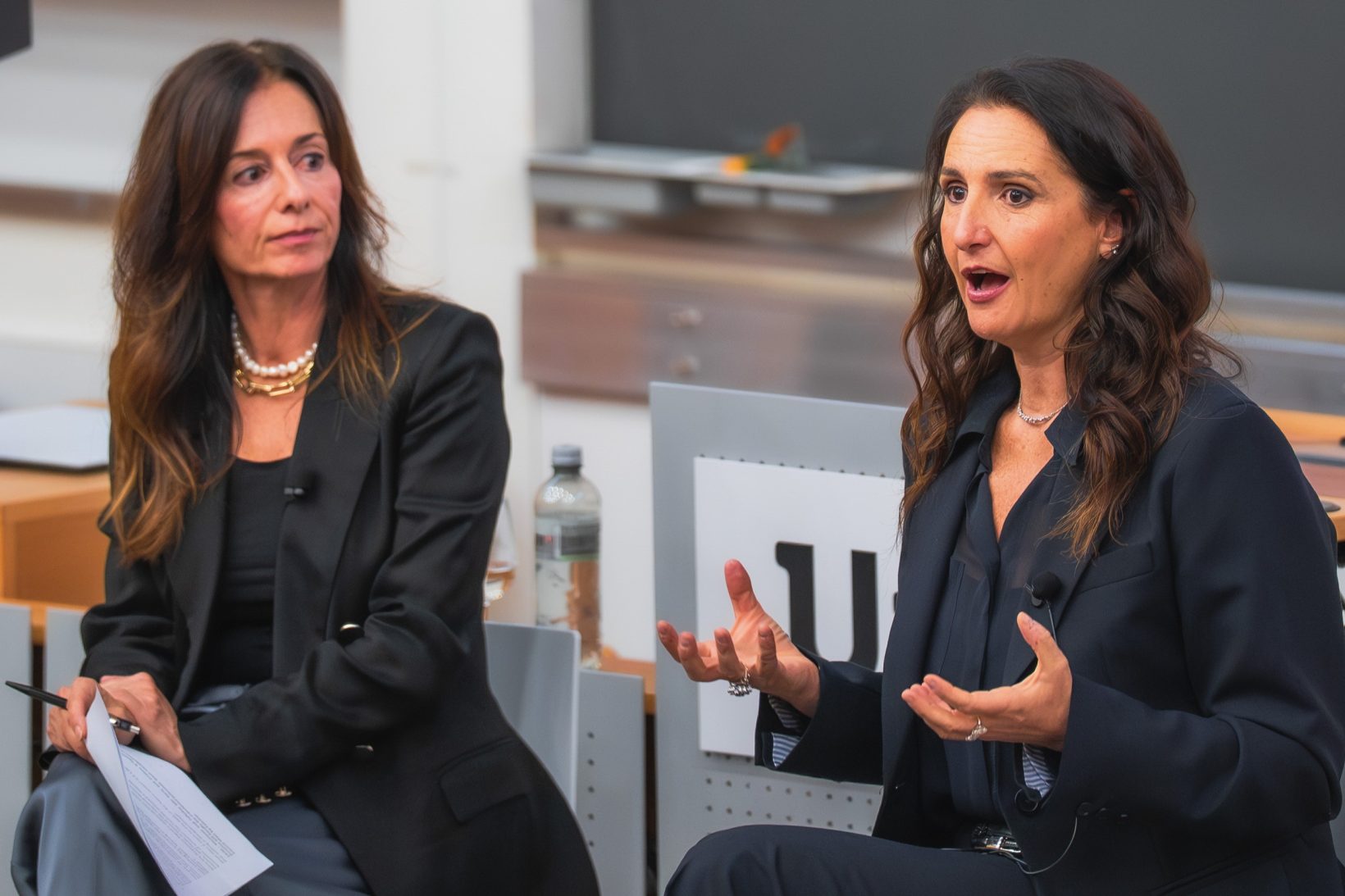
At an academic conference held last week on the HEC Lausanne campus, Ilaria Resta, CEO of Audemars Piguet, and Marianne Schmid Mast, Dean and Professor at HEC Lausanne, shared their vision of modern leadership in a world shaped by multiple crises with 250 students and readers of Luxury Tribune.
On May 20, Franziska Gsell, Chief Marketing Officer of IWC Schaffhausen, was invited to the UNIL-HEC Lausanne campus to participate in a panel discussion on the topic: “The Power of the Brand Universe: How IWC Schaffhausen engineers an Emotional Response.”