Long considered the ‘little Switzerland’ of West Africa, Benin is showing all the signs of new economic prosperity. A vibrant arts scene, luxury hotels, a new fashion incubator and international festivals make it one of the trendiest destinations.
The Sofitel in Cotonou is a showcase for perfectly executed international hotel luxury in Benin, a country that is increasingly attracting luxury groups (Accor/Stéphane Aït Ouarab)
Night has almost fallen on the lagoon. At the Sofitel Cotonou Marina, the terraces are lit up by the pool. Tonight, the We Love Eya festival is transforming the hotel into a cosmopolitan hub for artists from Lagos and Paris: producers, designers, figures from the Beninese cultural scene and international guests mingle in relaxed elegance. Even Gims and Dadjoo have made the trip. Aya Nakamura, however, has stood them up. Sculptural dresses, impeccable silhouettes, bold jewellery: luxury is there, visible, a little garish. Total Dior looks, Goyard, Hermès, or Louis Vuitton bags, imposing diamond necklaces, gold everywhere, even on sunglasses frames. President Talon's son is there in designer sportswear from Parisian brands, surrounded by friends in Berluti trainers.
Newsletters
Cet article vous plaît ?
Inscrivez-vous à nos newsletters pour recevoir les dernières publications et analyses selon nos 4 thématiques:
NewsGen ZAnalysesTrends to watch
The pool party organised to close the continent's most prestigious urban music festival will last until 6am. This evening says a lot about the current situation in Benin. Luxury is no longer an imported product, but a language in the making, combining high-end hospitality, cultural affirmation and a desire for a unique narrative. In Cotonou, luxury is not flaunted like a trophy: it has settled in, infused itself. It is certainly not yet a structured market — but it is already a stage on which to display it.
Luxury is Displayed Without Restraint
The lobby of the Sofitel in Cotonou displays works by local contemporary artists (Accor/Stéphane Aït Ouarab)
The audience includes influential musicians from the contemporary African scene, designers based in Europe and West Africa, and cultural entrepreneurs who matter. They talk about music, fashion, hospitality, heritage and, above all, the future. The Sofitel, a showcase of perfectly executed international hotel luxury (with a construction budget of nearly €50 million), serves as the backdrop for another reality: a local creative ecosystem that no longer asks for permission.
The spa by KOS Paris at the Sofitel in Cotonou is fully booked more than a week in advance (Accor)
Its spa by KOS Paris is fully booked more than a week in advance. With its Partouche casino, cinema, nightclub and tennis courts, its facilities would make many luxury hotels green with envy. The hotel, which is celebrating its cotton anniversary (in other words, its first year of existence), also offers a rare culinary experience in Africa with L'Ami, the restaurant of chef Georgiana Viou, a Michelin-starred chef who has become a true celebrity and champion of Franco-Beninese fusion cuisine. Located on the first floor of the hotel, it is always busy with customers and private functions. In the car park, on the Avenue de la Corniche side, diplomatic 4x4s with green number plates jostle for access to the rotunda with Mercedes or Lexus limousines and Porsches belonging to locals, some of whom have come from nearby Nigeria, as evidenced by their number plates.
Art, a Tool for National Storytelling
The heritage wall in Cotonou is the longest graffiti wall in Africa (Presidency of Benin)
Not far from there, along the autonomous port of Cotonou, a wall painted over several hundred metres is now one of the most visible – and most political – expressions of Benin's artistic vitality. A monumental open-air fresco, it transforms a strategic port infrastructure into an urban gallery, blending memory, identity and contemporary projection. It tells the story of Benin, its figures and myths, but also its modern aspirations, in a visual language accessible to all. It sends a strong signal: it marks a desire to place creativity at the heart of everyday life, to make art a tool for national storytelling, rather than a mere ornament. This ‘heritage wall’, over 940 metres long with a painted surface area of around 2,000 m², is the longest graffiti wall in Africa and the third longest in the world. It was initiated as part of the Effet Graff festival, a major urban art event in French-speaking Africa. Laurenson Djihouessi, a Beninese graffiti artist known as Mr Stone, is one of the leading figures of this festival and has been involved in the gradual creation of the wall since 2013, under the auspices of the ASSART Association. He has brought together a community of renowned mural artists such as Edgar Bernardo Dos Santos, Romario Agbo-Koffi, Bakr and Dynam (Morocco), Kalouf (France), Paola Delfín (Mexico) and Goli Roger (Ivory Coast), united around a collective narrative. The paintings combine history, memory and contemporary vision: figures from the Kingdom of Dahomey (the former name of Benin), Amazons and royal symbols, often linked to the 26 historical treasures returned to Benin, to bring to life the idea that ‘art goes to the public’, which is emblematic of this approach.
The Zinsou Foundation, created in 2005, is the epicenter of Benin's artistic renaissance (Zinsou Foundation)
Our role is to build bridges: between generations, between Africa and the rest of the world, between memory and contemporary creation
Marie-Cécile Zinsou, co-founder of the Zinsou Foundation
One of Africa's most dynamic countries, blessed with rare democratic and political stability since its independence, Benin has for years been a key player on the regional and international art scene. Pioneers Lionel Zinsou and Marie-Cécile Zinsou created the Zinsou Foundation in 2005, which has become the discreet but decisive epicentre of Benin's artistic renaissance. By placing contemporary art at the heart of public space, opening museums, residences, and exhibitions accessible to all, it has shaped a credible, visible, and internationalised local scene. More than just a venue, the Foundation acts as a cultural catalyst, offering Benin a solid contemporary artistic narrative — precisely the kind of anchorage that the luxury sector, in search of meaning and cultural legitimacy, is now watching closely: ‘Our role is to build bridges: between generations, between Africa and the rest of the world, between memory and contemporary creation,’ says Marie-Cécile Zinsou.
Contemporary Beninese Creation is Taking Shape and Being Exported
In October 2024, Benin's President Patrice Talon and French President Emmanuel Macron inaugurated a traveling exhibition of contemporary art from Benin at the Conciergerie in Paris (Presidency of Benin)
The country now enjoys a level of international visibility rarely achieved by a West African country of comparable size. The exhibition ‘Révélation ! Art contemporain du Bénin’ (Revelation! Contemporary Art from Benin), presented at the Conciergerie in Paris, attracted 173,000 visitors between October 2024 and January 2025, a sign of real and growing interest in the contemporary Beninese scene outside the continent. Widely publicised, it presented more than 100 works by 42 artists from Benin and the diaspora, combining painting, sculpture, photography, video, and installations. At the national level, the diptych exhibition of the 26 Beninese royal treasures returned by France attracted more than 200,000 visitors in Cotonou, 34,000 in Morocco, and 80,000 in Martinique, providing a tangible snapshot of the public's appetite for Beninese art and its potential for cultural appeal. This success is not anecdotal: it is part of a broader context in which contemporary Beninese creativity is becoming more structured and increasingly exported.
Located in the heart of the Beninese city, the Cotonou Museum of Contemporary Art (MACC), which will open in 2026, will help to showcase Benin's arts (Les Crayons Scénographie)
To capitalise on this momentum, the Beninese government has launched an ambitious cultural investment plan, including the planned opening of a Museum of Modern Art in Cotonou at the end of 2026, as well as several other themed museums (memory and slavery in Ouidah, Vodou in Porto-Novo, the epic of the Amazons and kings of Danhomè in Abomey). The return of 26 royal treasures (historical objects returned in 2021 after more than a century in exile) served as a powerful symbolic and media lever to reposition Benin as the cultural epicentre of its own history, but also as a credible player on the arts scene.
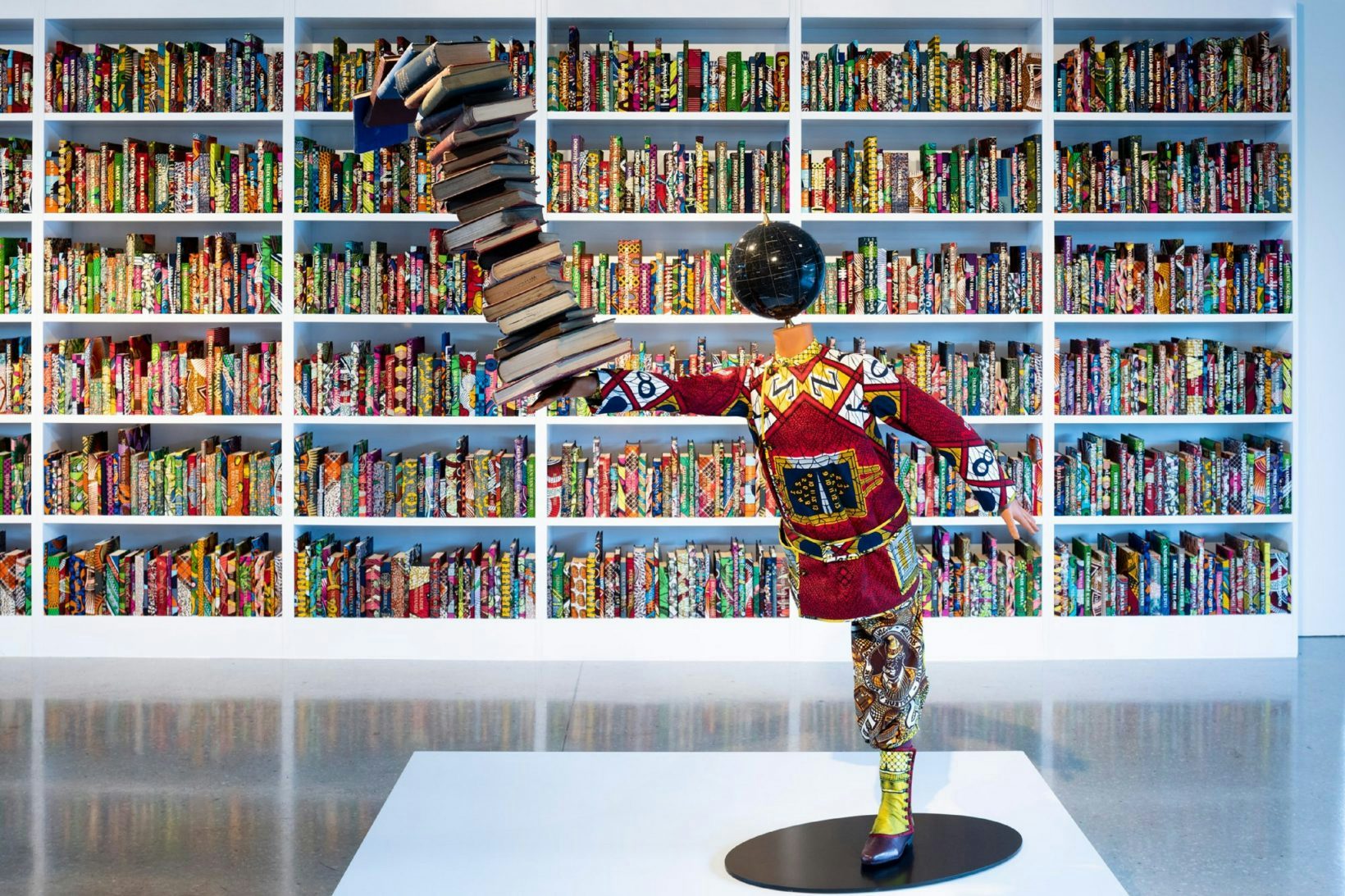
While formal statistics on the contemporary art market in Benin (auctions, galleries, transaction prices) are not yet as consolidated as in the major African art markets (Lagos, Cape Town, Johannesburg), exhibition figures already indicate a very large public audience, which is key to attracting collectors, patrons and cultural investors. The proliferation of travelling exhibitions and the growing presence of Beninese artists at international events – from the Paris scene to African and Caribbean venues – is giving Beninese art increasing visibility, often driven by names such as Georges Adéagbo, Emo de Medeiros and other rising talents. In Cotonou, Charly d'Almeida and Charbel Coffi play a discreet but essential role in structuring the contemporary art scene. Their venues, which are galleries, studios and meeting places all at once, function as living laboratories, open to artists, ideas and dialogue.
In a city bursting with creative energy, these spaces embody a new generation of cultural platforms. They help to make Cotonou an essential stopping point, where art is both conceived and displayed.
The Galerie Vallois in Paris's 6th arrondissement has been showcasing artists from Benin and Togo since 1983 (Galerie Vallois)
They are not alone. For years, the Vallois, a famous Parisian gallery-owning couple, have played a discreet but decisive role in the recognition of Beninese art, long before the country became a fashionable subject on the international scene. Bucking the trend of condescending or purely ethnographic views long held about West Africa, they have championed a contemporary, demanding interpretation of Beninese creativity, placing it in the same critical field as international art. By exhibiting, supporting, and collecting Beninese artists, both in France and on the African continent, the Vallois have helped shift the perspective, moving art out of the realm of static heritage and anchoring it in a living, political, and conceptual scene.
A Prolific Fashion Incubator
FLY supports young creative African entrepreneurs to help them structure, professionalise and launch their brands
Claude Berna, Director of FLY
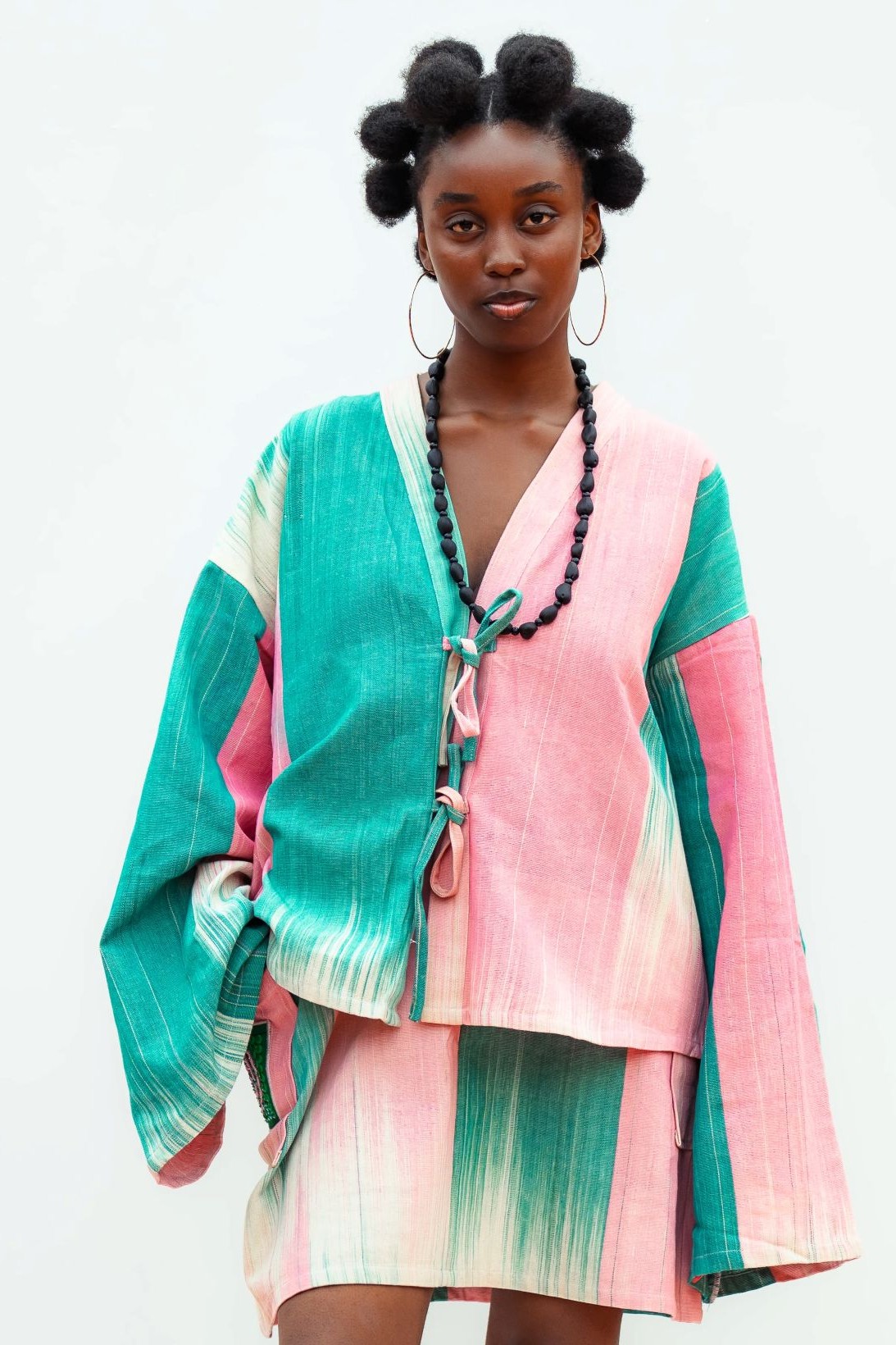
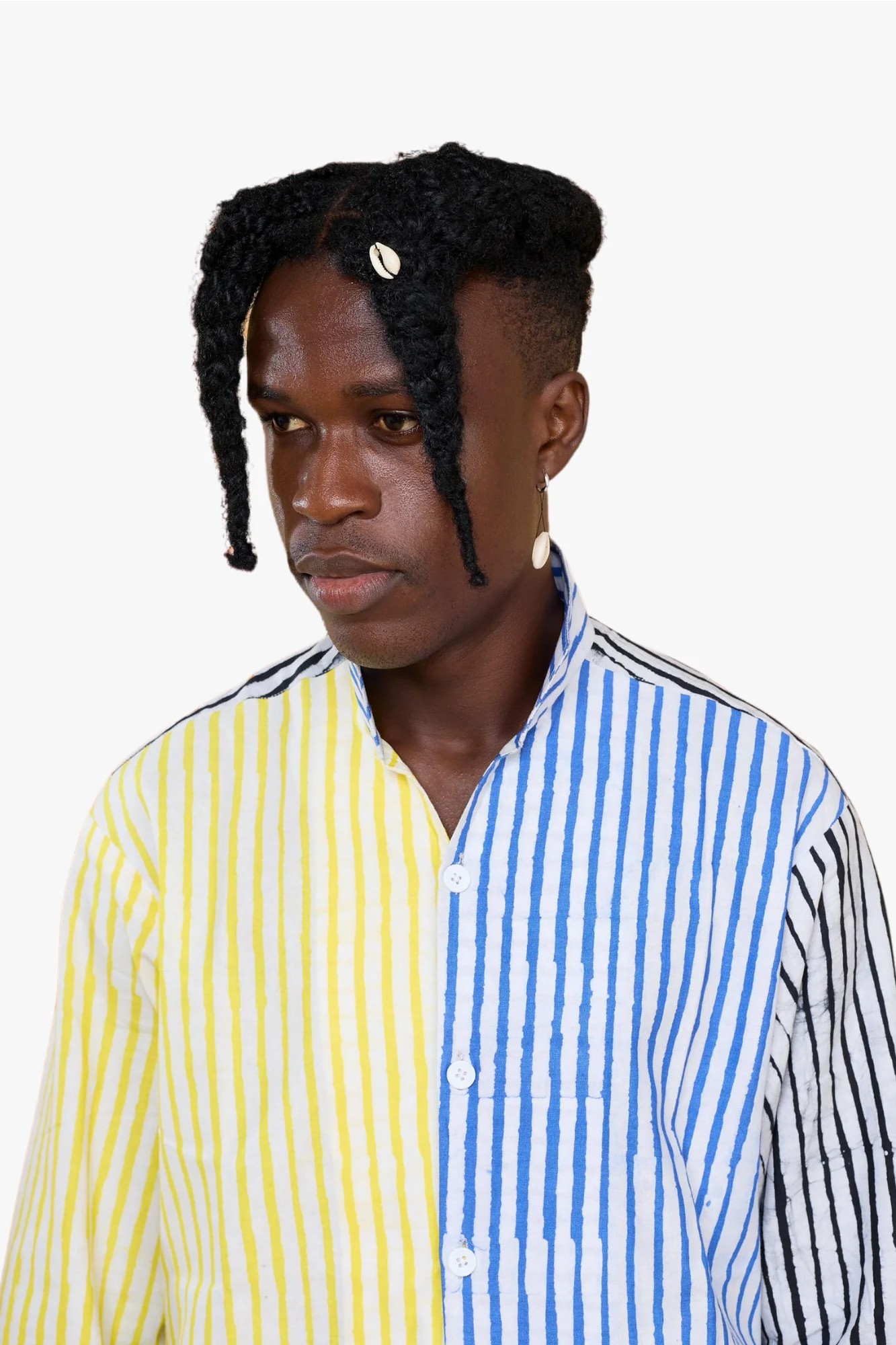
Further proof that Cotonou has entered the modern era is the FLY (Fashion Led by Youth) programme, a fashion incubator launched in Benin in 2024. The result of a partnership between Sèmè City — Benin's innovation hub — and the Institut Français de la Mode (IFM, Paris), with support from the World Bank, FLY has helped local fashion brands emerge. ‘Over a twelve-month period,’ explains its director Claude Borna, "FLY supports young creative African entrepreneurs to help them structure, professionalise and launch their brands."
The FLY program, a fashion incubator launched in 2024 in Benin, the result of a partnership between Sèmè City and the IFM in Paris, has given rise to local fashion brands (Vognon/Bakus Oraya)
At the end of the first intake, 19 brands, including Vognon, Ouidah Studio, Speak your truth, We are everyone, Bakusoraya and Mova breed adventure, presented their collections at a Demo Day, revealing projects inspired by local cultural heritage and ready to shine in Benin and beyond. FLY aims not only to support individual talent but also to position Benin as an emerging creative hub for African fashion, combining local know-how with international industry standards. Ultimately, a 330-hectare campus currently under construction in the city of Ouidah is set to host it.
Benin ticks several boxes that have become strategic for luxury brands: a strong and sovereign narrative (restitution of works, assumed cultural renaissance), unsaturated authenticity (unlike Lagos or Marrakech), a young creative scene that is still accessible, a strategic state investing in culture (museums, festivals, institutions) and a regional audience that is already there. For luxury, Benin is not a volume market, but a territory of meaning, storytelling and desire.
The Beninese experience invites us to rethink luxury not as an import from Western models, but as the reconquest of a unique aesthetic, carried by a local audience, a militant diaspora, and international audiences seeking rich, original cultural stories. The only unknown factor in the equation – and a significant one at that – is the political situation. President Talon, currently in office, was the target of a failed coup attempt a few weeks ago. He is due to leave office in a few months' time following elections that he has assured he will not contest, but pressure from neighbouring countries, Niger, Burkina Faso and Nigeria, has never been so strong. For now, at Byblos, Cotonou's posh nightclub, people continue to dance and drink champagne, choosing to ignore this sword of Damocles hanging over their heads.
The Mono River, the natural border between Benin and Togo, flows to the Atlantic Ocean, where it empties into Grand-Popo, above (Benin Tourism)
Zanzibar is a dream of azure beaches, marine wildlife and a tranquil lifestyle, but the archipelago has become Tanzania’s economic powerhouse, attracting a number of well-informed investors from Cape Town to Delhi and the Emirates. It is now launching its own oil industry.
In a global art market that remains mainly robust in 2023, despite occasional slowdowns, African art has been experiencing strong demand from collectors both on the continent and abroad. Elana Brundyn, a prominent specialist in African art known for her contributions to the Zeitz Museum of Contemporary Art Africa (Zeitz MOCAA) and the Norval Foundation, sheds light on this phenomenon.