Guillaume de Seynes, CEO of Hermès International: “Meeting the public is the reward for our work”
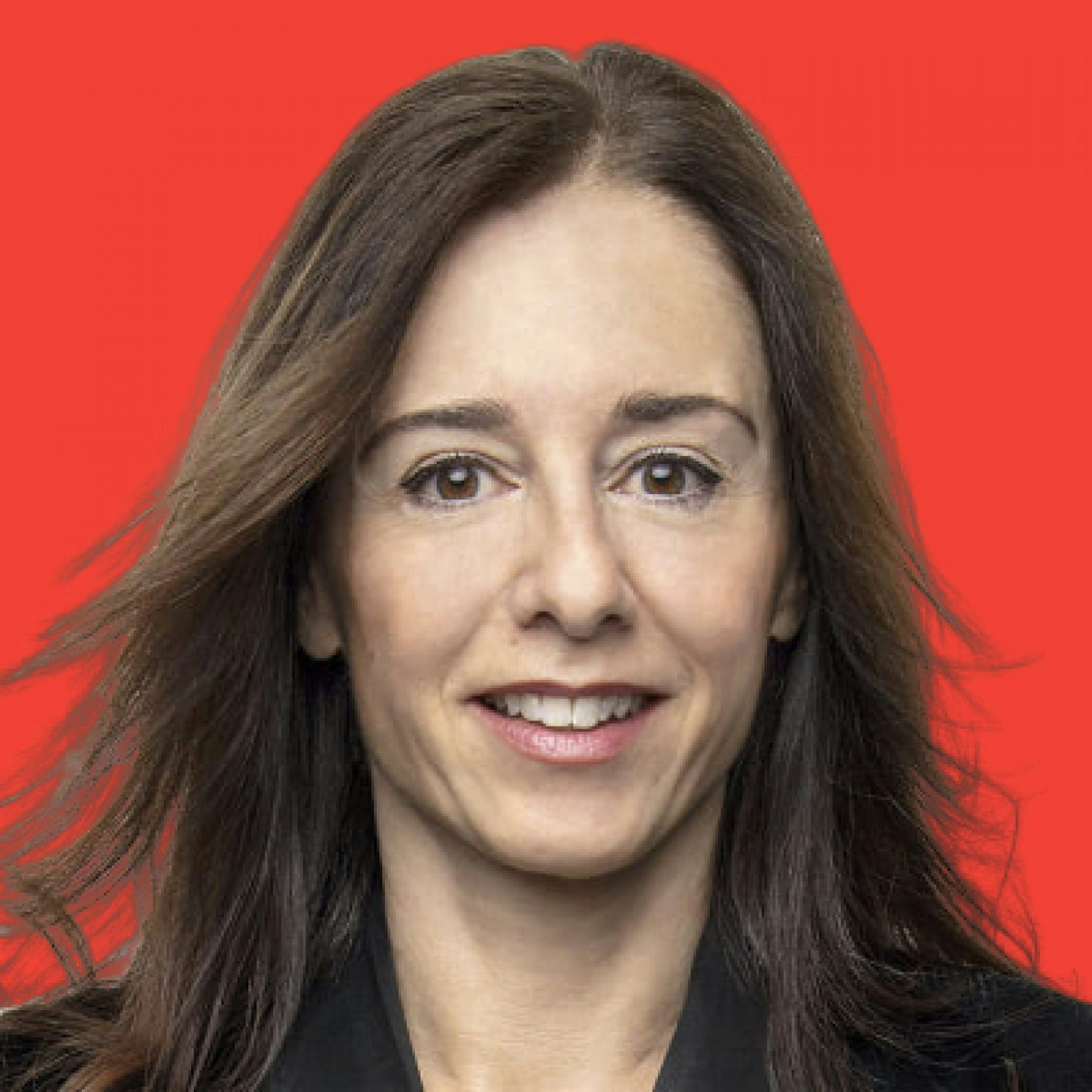
As the Watches and Wonders fair closed its doors on April 20 with a positive outcome and increased attendance, Guillaume de Seynes, CEO of Hermès International (upstream division and equity investments), outlines the measures taken by the brand to reverse the downward trend in its watchmaking division, which has struggled to regain the strong momentum of the post-Covid years.


Newsletters
Cet article vous plaît ?
Inscrivez-vous à nos newsletters pour recevoir les dernières publications et analyses selon nos 4 thématiques:
Guillaume de Seynes: We did indeed face a difficult start to 2025, mainly due to the slowdown in the Chinese market, whose impact weighed heavily on the watch sector. The second half picked up, before declining again in the first quarter of 2026. This is very clearly explained by the geopolitical situation in the Middle East in March, a region that is important for Hermès watchmaking. Especially since we were still growing in February 2026. Today, everything has come to a halt. In France and Europe, a general sense of concern has not helped. A watch is a pleasure purchase, more so than shoes or clothing.

We need to put things into perspective, as comparisons are generally made with the previous year, but post-Covid growth was very strong for La Montre Hermès: it recorded increases of 25% to 30% for three consecutive years. In 2025, the division posted a 2% decline, and 4% in the first quarter. Nevertheless, in the Morgan Stanley ranking, we remain fairly stable, at 14th place in the Top 20 brands. Our in-store sales teams are increasingly well-trained in watchmaking and know how to create desire for a Hermès watch.
Yes. I always cite as an example the collection of unusual complications such as Temps Suspendu or L’Heure de la Lune, which have succeeded in attracting watch enthusiasts to Hermès who were not previously customers of the house, particularly in Asia.

The project is continuing and is well underway. Everything will be completed during 2028. The first priority was to expand and standardize the workspaces and environment. The second was to support growth. As for hiring, we will assess our needs in two years. We are also considering bringing additional expertise in-house.
It is too early to say, but as you know, Hermès’ strategy is to control each métier, either through long-term partners or by internalizing skills.
Over the past five years, growth has largely been driven by value, and that remains our intention. However, we also embrace maintaining volume momentum with the quartz watch segment. It is an interesting, high-quality range that provides access to the Hermès universe. In France, this trend is very clear and dominates the market. Hermès quartz watches are seen as beautiful objects, often given as gifts to mark important events. We are proud of this, while also reinforcing our ambition to move upmarket.
No, not at all.
At Hermès, we never think in terms of target groups. A Birkin bag makes the heart of an 80-year-old woman beat just as much as that of an 18-year-old girl.
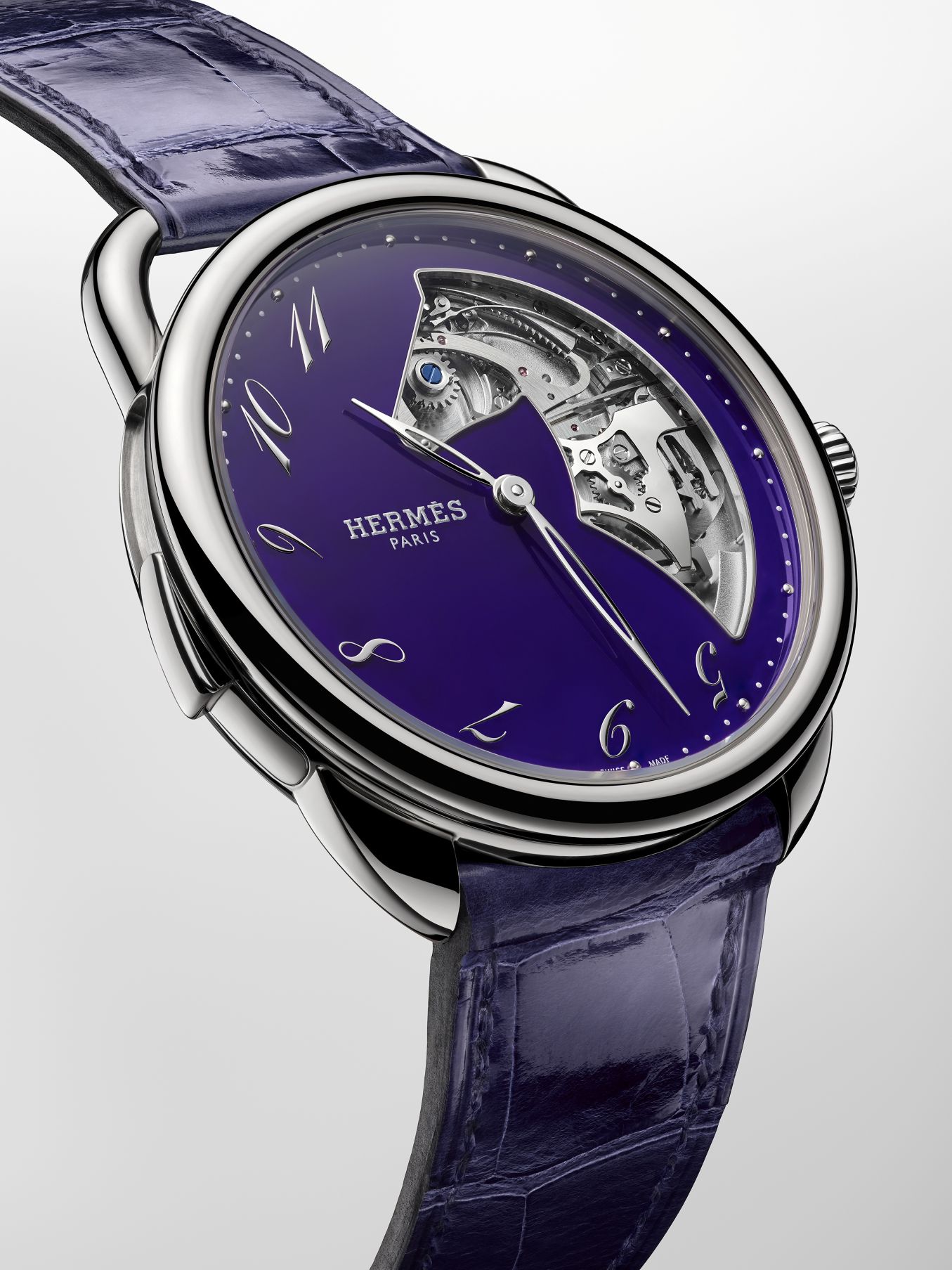
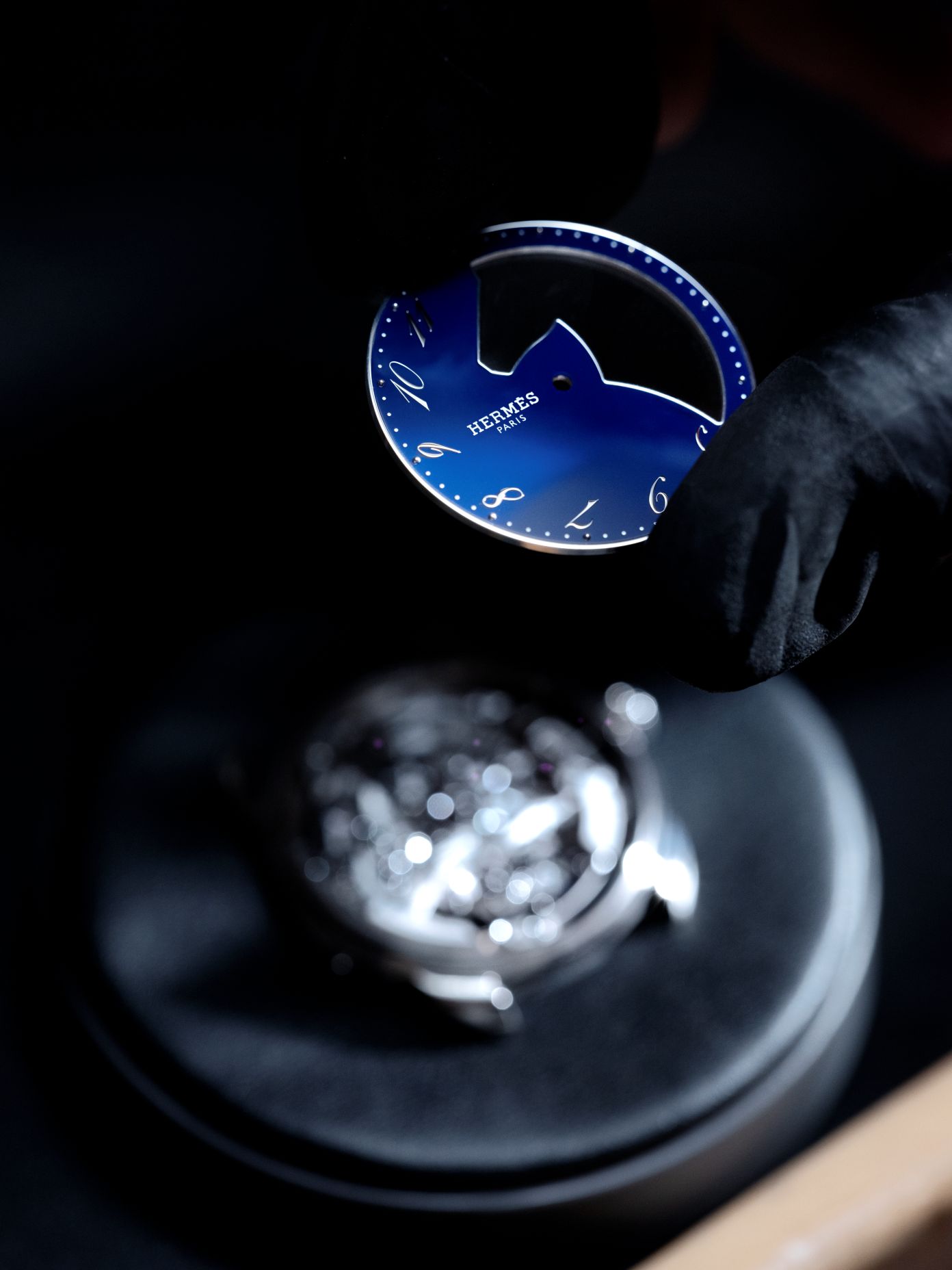
That’s true. We fully embrace our accessible items, such as our fashion jewelry range. What matters most is striving for excellence in quality, across all segments and price ranges. Hermès quartz watches are entirely Swiss-made. Another fundamental point is that we reflect our costs in our prices. In this regard, the Kelly watch is a great success.
Among the newer pieces, the Hermès H08—a real success over the past five years, now offered this year with a skeleton movement—is becoming increasingly significant in our sales. Then of course the Cape Cod and Arceau for both mechanical and quartz ranges, as well as signature models like the Heure H and the Kelly for quartz.

The reality of watchmaking at Hermès is that it is very closely tied to our stores, which account for 90% of our sales. It’s important to note that stores are free in their purchasing decisions across all métiers, which is a particularity of the house. You cannot force a store team to buy one collection over another. To win them over, you must deploy a compelling creative vision and a clear strategy. The watch is no exception; it is the most difficult product to sell, as it is technical, highly competitive, and appeals to a very knowledgeable clientele. This challenge is central. However, once a salesperson has experienced the pleasure of selling a minute repeater, for example, they would have to sell many ties to match that performance. Still, Hermès makes a point of welcoming everyone. In the same store, you might find an ultra-wealthy client with unlimited purchasing power alongside someone willing to make a significant effort to buy a quartz Cape Cod for their son who has just passed his baccalaureate. We are proud of this and we stand by it.
Hermès has a very clear policy: the house raises prices once a year, at the beginning of the year, based on costs, currency impacts, and customs duties. In May 2025, we immediately implemented an additional price increase depending on the countries and applicable rates.
Hermès always participates in a collective dynamic. For example, we sit on the foundation board of Watches and Wonders. In fashion, it’s the same dynamic. I remain very active within the Comité Colbert, which I chaired, as well as within the Fédération de la Haute Couture et de la Mode, whose executive committee includes the heads of Chanel, LVMH, Saint Laurent, and myself. This is an important point, and one my uncle also valued. Cooperation between major groups—who are also competitors—is essential to maintaining strong French leadership in the fashion industry. In watchmaking, it’s the same process in Switzerland, and Watches and Wonders embodies this collective spirit.

Yes, absolutely. Hermès can express its uniqueness there, notably through the distinctive scenography of its space.
Meeting the public is the reward for our work. When you see someone wearing a Hermès object, it means that beyond the purchase, it has given them an emotion that, over time, will become a memory or a sentimental token. The public attending Watches and Wonders validates this value, this sincere recognition of what we do. Certain rituals have always been appreciated, such as the unveiling of Hermès store windows showcasing new collections. The public is attached to this, as are we. Let me explain: Leila Menchari, an iconic Hermès figure for four decades, whose extraordinary talent was to surprise with each window display, would tell no one what she was preparing—not even Jean-Louis Dumas. The unveiling was highly anticipated. Even today, no one from senior management, not even my cousin the artistic director, knows what will be revealed. This theatricality symbolizes our creative freedom, a founding principle of Hermès. And it is also what drives us in watchmaking.

Partager l'article
Continuez votre lecture
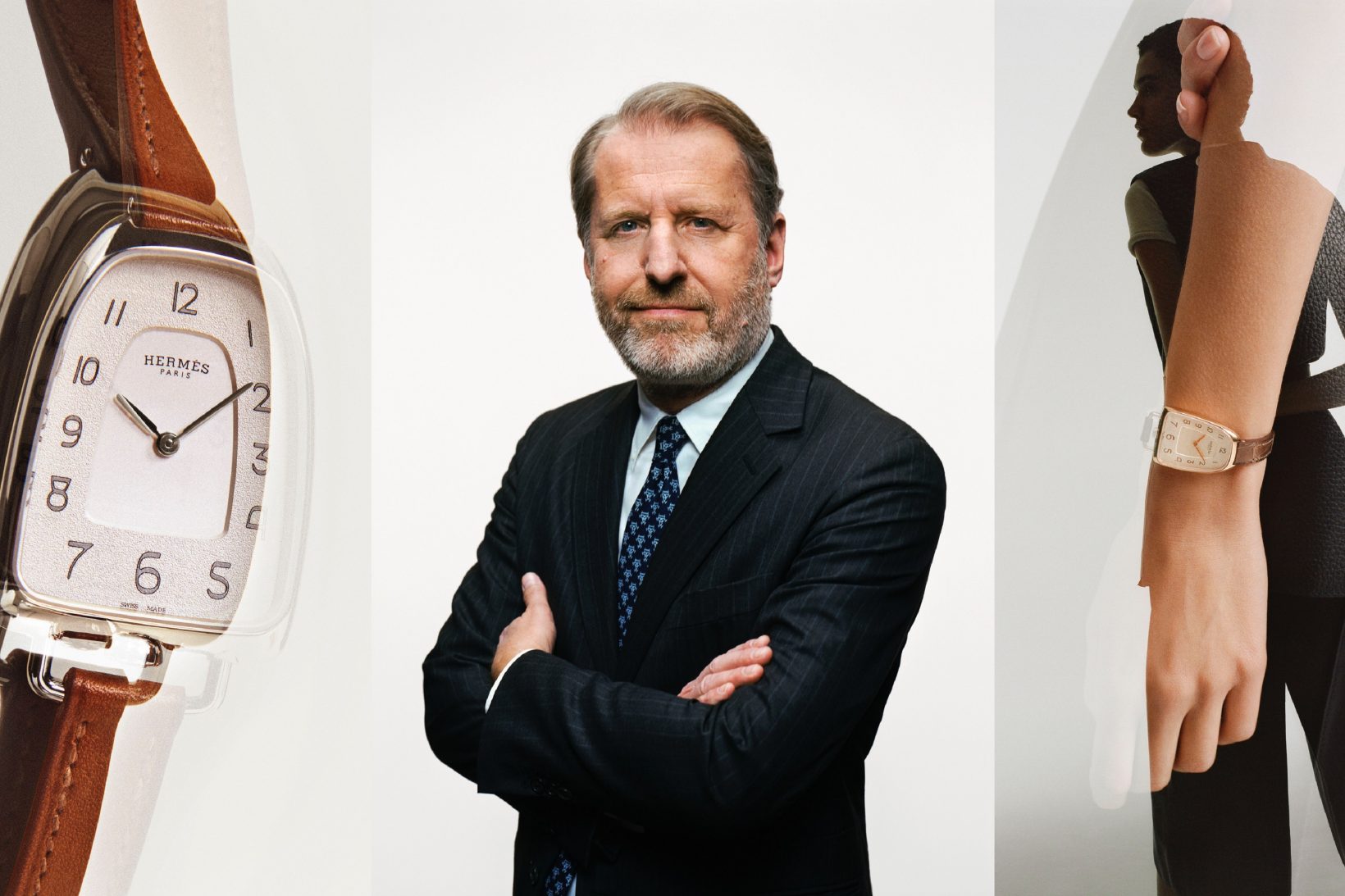
« To Hermès, taking a stance in watchmaking was very formative »
Hermès watchmaking has known a much-envied growth for several years, just like all the crafts of the group. Guillaume de Seynes, general manager of the Hermès Maison and member of the founding family, explains the reasons for the success, which has been long awaited. Today, he announces a significant extension of the watchmaking manufacture in Noirmont, Switzerland.

Watchmaking in the Face of Geopolitical Shock: Will It Be Resilient in 2026?
While the truce in the Middle East has temporarily eased concerns, it has not alleviated the multifactorial crisis that has been affecting the watchmaking sector for nearly two years. As Watches and Wonders Geneva opens its doors on April 14, and as new geopolitical challenges destabilize the industry, what prospects are emerging for watchmakers and subcontractors in 2026?
Newsletters
Cet article vous plaît ?
Inscrivez-vous à nos newsletters pour recevoir les dernières publications et analyses selon nos 4 thématiques: