At the foot of the Tatra Mountains, Zakopane claims to be Poland’s winter capital. With tourism booming, the resort is betting everything on its cultural, authentic, and historical appeal to attract a more upscale international clientele.
Zakopane has become the country’s leading mountain and nature destination, welcoming over 6 million visitors each year ((Willa Elżbiecina)
6 Mio
Number of tourists who visit Zakopane each year
10%
Zakopane's share of national tourist traffic
1890
Introduction to the "Zakopane style" by Stanislaw Witkiewicz
Over the past twenty years, Zakopane has seen its appeal to tourists grow in a Poland experiencing explosive economic growth, which by 2025 had become the sixth-largest economy in the European Union, overtaking Belgium. While Kraków dominates urban tourism, Zakopane has become the country’s leading mountain and nature destination, welcoming over 6 million visitors each year. In summer, tourists enjoy hiking, biking, rock climbing, and rafting. In winter, cross-country skiing, ski touring, and thermal spa facilities are the main activities.
We want to present the city to Generation Z, who are seeking different and authentic experiences.
Łukasz Filipowicz, Mayor of Zakopane
The local economy depends entirely on tourism. While visitors are predominantly domestic, international tourism is growing, with an increase in visitors from Slovakia, Hungary, the Baltic states, Germany, the United Kingdom, Scandinavia, the Gulf states, Israel, and finally, the United States.
In the Małopolska region, the town has become a pillar of the tourism economy: “It is clear that at least 30% of the region’s tourism revenue is generated in Zakopane, and nearly 10% of national tourist traffic is concentrated in this single municipality, which is experiencing strong annual growth. This confirms that Zakopane generates above-average revenue relative to its size,” explained Karol Wagner, vice president of the Tatra Chamber of Commerce, during a press trip attended by Luxury Tribune.
Newsletters
Cet article vous plaît ?
Inscrivez-vous à nos newsletters pour recevoir les dernières publications et analyses selon nos 4 thématiques:
NewsGen ZAnalysesTrends to watch
The “Zakopane style” was introduced by Stanisław Witkiewicz around 1890, who drew inspiration from the traditional architecture of the Podhale highlanders and Art Nouveau (Shutterstock)
A Strategy Focused on Authenticity
Traditional folk costumes are still regularly worn by the residents of Zakopane (Willa Elżbiecina)
Since Łukasz Filipowicz took office as Mayor of Zakopane two years ago, the city has doubled its efforts to invite the press and influencers with the aim of attracting a younger generation and deconstructing the image of a Poland still scarred by its past. “In two years, the tourism offering has evolved significantly while still preserving the city’s authenticity. We want to present the city to Generation Z, who are seeking different and authentic experiences. We don’t want to attract tourists just for the mountains but also for Zakopane’s culture,” said the mayor from the Red Manor (Czerwony Dwór). To support this transformation, the municipality is working closely with the Tatra Chamber of Commerce, the Lesser Poland Tourism Organization, and the Tatra National Park.
At least 30% of the region’s tourism revenue is generated in Zakopane, and nearly 10% of national tourist traffic is concentrated in this single municipality
Karol Wagner, vice president of the Tatra Chamber of Commerce
While it is true that Zakopane does not bear the direct scars of Poland’s tragic history, the village remains deeply attached to its traditions and mountain culture.
In the streets, which are relatively deserted during this off-season, it is quite evident that, for now, Zakopane is primarily a destination for cultural and sports tourism rather than an exclusive and ultra-luxurious Alpine resort like St. Moritz or Courchevel. It proudly cultivates an indigenous culture, which constitutes its main strategic asset: “Authentic and traditional culture is still alive in Zakopane in its most authentic form; that is what makes it strong,” emphasized the mayor.
Cultural Heritage and Thermal Springs as Major Assets
It has become difficult to buy property in Zakopane now because many buildings are historic and vacant lots are scarce
Łukasz Filipowicz, Mayor of Zakopane
Local architecture is one of the most visible symbols of this identity. The wooden houses, inspired by traditional mountain chalets, have retained their early 19th-century appearance. The “Zakopane style” was introduced by Stanisław Witkiewicz around 1890, who drew inspiration from the traditional architecture of the Podhale highlanders and Art Nouveau. Folkloric traditions remain deeply embedded in local daily life, and regional festivals are still celebrated in traditional costumes. Several sites help preserve this historical legacy, such as the Wlodzimierz Art Gallery and the Red Manor in Zakopane, which house works by 19th-century artists who brought attention to this small mountain hamlet at a time when Poland did not yet exist as an independent state.
Zakopane developed in the mid-19th century as an enclave of freedom and Polish identity, where Polish artists and intellectuals gathered to escape the political constraints imposed by the occupying powers. Although some of these houses have gone up in smoke over the years, many vestiges remain and trace the history of the resort, offering tourists a truly immersive experience.
Beyond its cultural heritage, Zakopane is also accelerating its development in the wellness sector, notably through its thermal parks, one of which is set to be the largest in Poland. Zakopane’s thermal history dates back to the early 19th century, when Polish elites suffering from tuberculosis came here to recharge and take advantage of the thermal waters and mountain air for treatment. This is how the region began to make a name for itself.
“We have a highly developed offering centered on health and wellness, particularly for seniors through massages and packages that include medical care,” explains the mayor. Furthermore, the municipality is seeking to strengthen its image as a sustainable destination by installing new geothermal wells and phasing out coal-fired heating.
Zakopane is located in a region rich in geothermal activity, offering naturally heated mineral waters renowned for their therapeutic benefits. The city is also accelerating its development in the wellness sector (Zakopane)
MICE as a Strategic Development Focus
Business tourism is another growth driver identified by Zakopane. While Kraków ranked 23rd in the ICAA 2022 ranking of business destinations, Zakopane is taking advantage of this to attract a portion of this MICE clientele. To this end, the hotel and real estate offerings are gradually expanding their range. “There have been many real estate projects featuring rental apartments and large luxury hotels such as the Radisson Blu Hotel & Residence, the Mövenpick Imperial Hotel, and the Marriott,” explained the mayor. This momentum is also putting significant pressure on the city and its residents: “It has become difficult to buy property in Zakopane now because many buildings are historic and vacant lots are scarce,” he added.
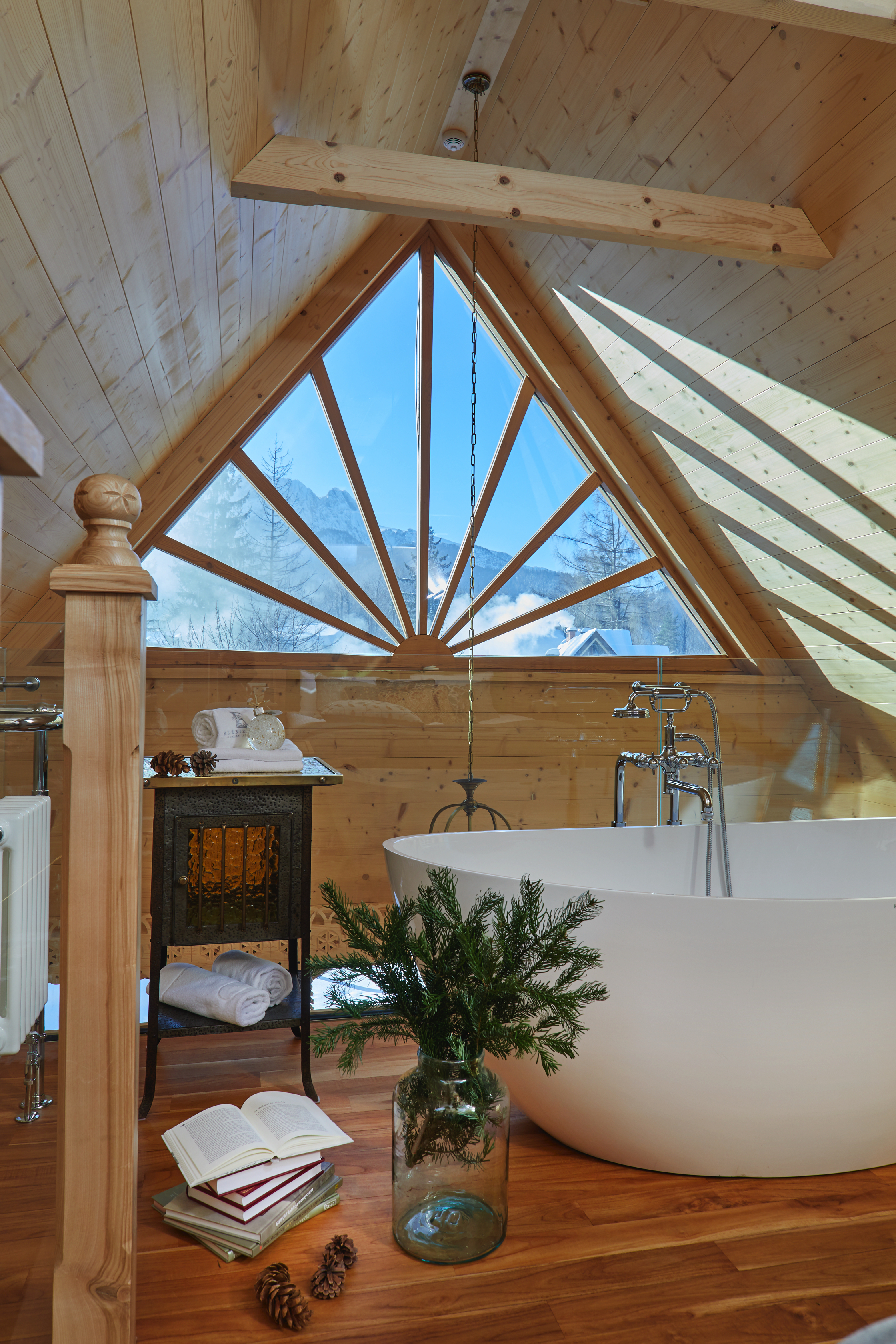
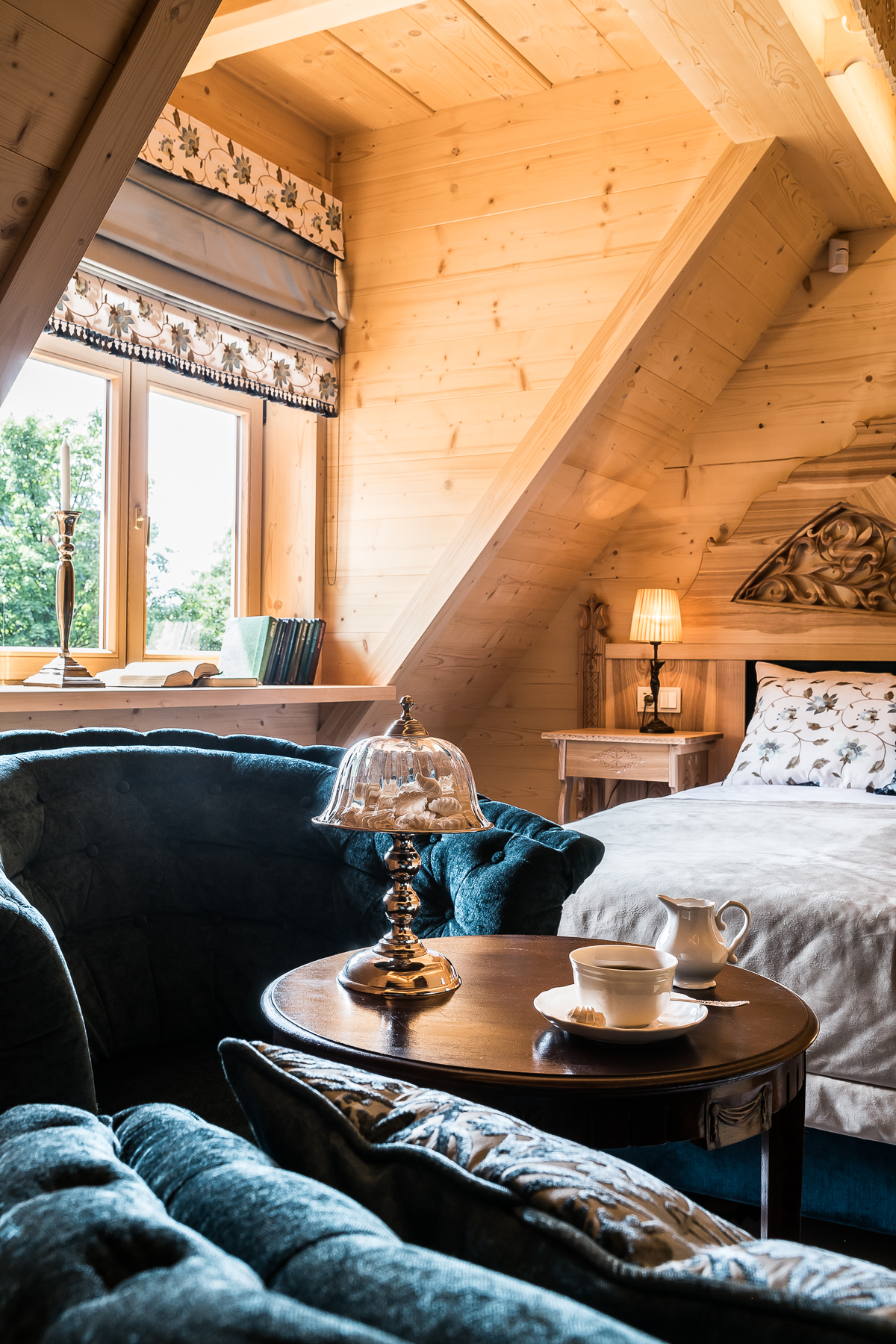
One of the establishments best suited to this clientele is undoubtedly Willa Elżbiecina, located in the heart of Zakopane’s former cultural and social hub. This very intimate property, built in 1912, retained its original form before being purchased and completely renovated in 2015 by the current owners, Malgorzata and Krzysytof Jablonski. It can accommodate up to 16 people in eight bedrooms and up to 35 people for a reception. To rent it, the price ranges from 2,300 to 3,500 euros per night, depending on the season.
Willa Elżbiecina, built in 1912, retained its original form before being purchased and completely renovated in 2015 by the current owners, Malgorzata and Krzysytof Jablonski (Willa Elżbiecina)
The Sensitive Issue of Mass Tourism
Poland has emerged as one of the safest, most culturally rich, and relaxing destinations.
Karol Wagner, vice president of the Tatra Chamber of Commerce
However, Poland, which welcomed 58.9 million tourists in 2025, still lacks a dedicated Ministry of Tourism commensurate with its growth, just as Zakopane does not yet have its own tourism office. Whereas other European countries like Germany and France have a separate ministry to support and subsidize their tourism industry. In Poland, these budgets fall under the Ministry of Sport, whose financial logic and economic profile are entirely different.
Yet, over the course of a year between 2023 and 2024, the country saw a global increase in visitor numbers, particularly from Cyprus (+170%), Spain (+126%), Italy (+84%), and Canada (77.43%). “Poland has emerged as one of the safest, most culturally rich, and relaxing destinations. Tourists are seeking a change of scenery and a sense of security in their travels, which allows us to grow among the top European destinations,” said Karol Wagner.
Poland welcomed 58.9 million tourists in 2025 and became the sixth-largest economy in the European Union, overtaking Belgium. Here, Krakow (Shutterstock)
But this rise in tourism is also causing several tensions. Last summer, Zakopane’s image was already undermined by the massive influx of tourists from Gulf countries, sparking local debates about the risk of losing authenticity. Before the crisis in the Middle East, Flydubai operated up to seven daily flights between Dubai and Kraków, leading to strong growth (+66% compared to 2023) in visitors from the UAE. The hospitality and restaurant sectors thus quickly adapted with Arabic-language menus and halal dining options, in a city nonetheless renowned for its local dialect and traditions.
Tourists from Gulf countries account for no more than 3% of annual visitors and up to 8% during the summer
Łukasz Filipowicz, Mayor of Zakopane
In 2024, 10% of the 5 million tourists who visited Zakopane and its surroundings were nationals of Gulf countries. On this point, the mayor clarifies: “Tourists from Gulf countries account for no more than 3% of annual visitors and up to 8% during the summer.” While he acknowledges that low-cost flights have attracted a clientele far removed from the premium positioning sought, particularly after Covid, he maintains: “It was not a strategic mistake to open our doors to the Gulf countries; on the contrary, local merchants were delighted. They are customers like any others; we must ensure they feel welcome here. Tourists of other nationalities are far more problematic.”
Zakopane now finds itself at a strategic turning point. Looking ahead, the municipality says it will prioritize the development of sustainable tourism, expanding its infrastructure, and attracting affluent clients from Western Europe and Asia, while also boosting event tourism and conferences. It remains to be seen how it will manage to evolve in an increasingly unstable geopolitical context, on which it is entirely dependent. The other challenge will be preserving the cultural identity that makes it unique today. It is a delicate balance to strike between moving upmarket and maintaining authenticity—one that has already taken a toll on other European destinations like Barcelona and Lisbon.
Zakopane now finds itself at a strategic turning point between moving upmarket and maintaining authenticity (Shutterstock)
Willa Elżbiecina, a historic residence in the heart of Zakopane
Before becoming an exclusive hotel, Willa Elżbiecina was first and foremost one of Zakopane’s most beautiful buildings. Built in 1912 by Wojciech Roj, a carpenter, mountain guide and close friend of Tytus Chałubiński — one of the great promoters of the resort in the 19th century — the villa is in keeping with the architectural tradition of Podhale. Set on a stone base and topped with a gabled roof covered in shingles, it embodies the Zakopane style, an aesthetic conceived by Stanisław Witkiewicz and inspired by mountain architecture.
Already a holiday resort in the interwar period, the residence was a hub for figures from the worlds of politics, culture and the arts. The villa also retains a unique relationship with the Polish avant-garde: in 1931, Stanisław Ignacy Witkiewicz, known as Witkacy, painted several portraits there, including one of Korfanty.
Restored from 2015 onwards, then opened to guests in 2019, and now owned by Małgorzata and Krzysztof Jabłoński, the villa has been reimagined as a luxury private residence, without losing its original character. It is now available to rent in its entirety, featuring eight bedrooms and bathrooms, reception areas, a garden, a terrace with views of Giewont, private parking, a fully equipped kitchen, a gym and a private spa. The property is ideal for families, groups of friends or events. Willa Elżbiecina offers a rare and authentic experience in the heart of the mountains.
Albania’s allure for influential investors is growing, with high-profile, ambitious projects in the pipeline. This summer, Jared Kushner, son-in-law of former U.S. President Donald Trump, […]