Since April 14, the 65 watchmakers gathered at the Watches and Wonders Geneva show have been unveiling their new releases. In this race for innovation, which ones are making a lasting impression in an increasingly competitive industry? The editorial team at Luxury Tribune presents an early selection.
With its blend of soft yellow, warm gray, and delicate pink, the 18-karat Jubilee Gold shade introduced by Rolex for its Day-Date 40 model made quite an impression at the show (Rolex)
This is the most strategic week of the year for the watch industry. From April 14 to 20, major groups and independent houses compete to capture the attention of professionals, journalists, and visitors who have come in their thousands. This year, competition is heating up with sixty-five brands in the halls of Palexpo; the main challenge is to stand out amid a continuous stream of new releases.
Newsletters
Cet article vous plaît ?
Inscrivez-vous à nos newsletters pour recevoir les dernières publications et analyses selon nos 4 thématiques:
NewsGen ZAnalysesTrends to watch
Beyond grandiose displays, the presence of international celebrities, immersive booths, and events during and on the sidelines of the fair, brands must above all demonstrate the relevance of their expertise and their capacity for innovation. Every year, even as history repeats itself, new trends emerge, influenced by economic, societal, and geopolitical contexts.
1. The 18-karat Gold Alloy of the Rolex Day-Date 40
With its blend of soft yellow, warm gray, and gentle pink, the 18-karat Jubilee Gold hue launched by Rolex for its Day-Date 40 model made quite an impression at the fair. This unique gold alloy, entirely developed and manufactured in-house, joins the only four precious metal alloys used in Rolex’s collections: yellow gold, white gold, Everose gold (rose gold), and platinum. Its sandy, almost beige hue, which shifts with the light, is intended to be less dazzling than rose gold and more understated than yellow gold, contrasting with the model’s sea-green aventurine dial. Since 1956, the Day-Date—a watch gifted to John F. Kennedy—has always been produced entirely in 18-carat yellow gold or 950 platinum. For now, this model featuring Jubilee gold remains a prototype, but other watches will benefit from this alloy as the foundry begins production of this new precious alloy.
2. Chanel’s Tweed Gem-Setting Techniques
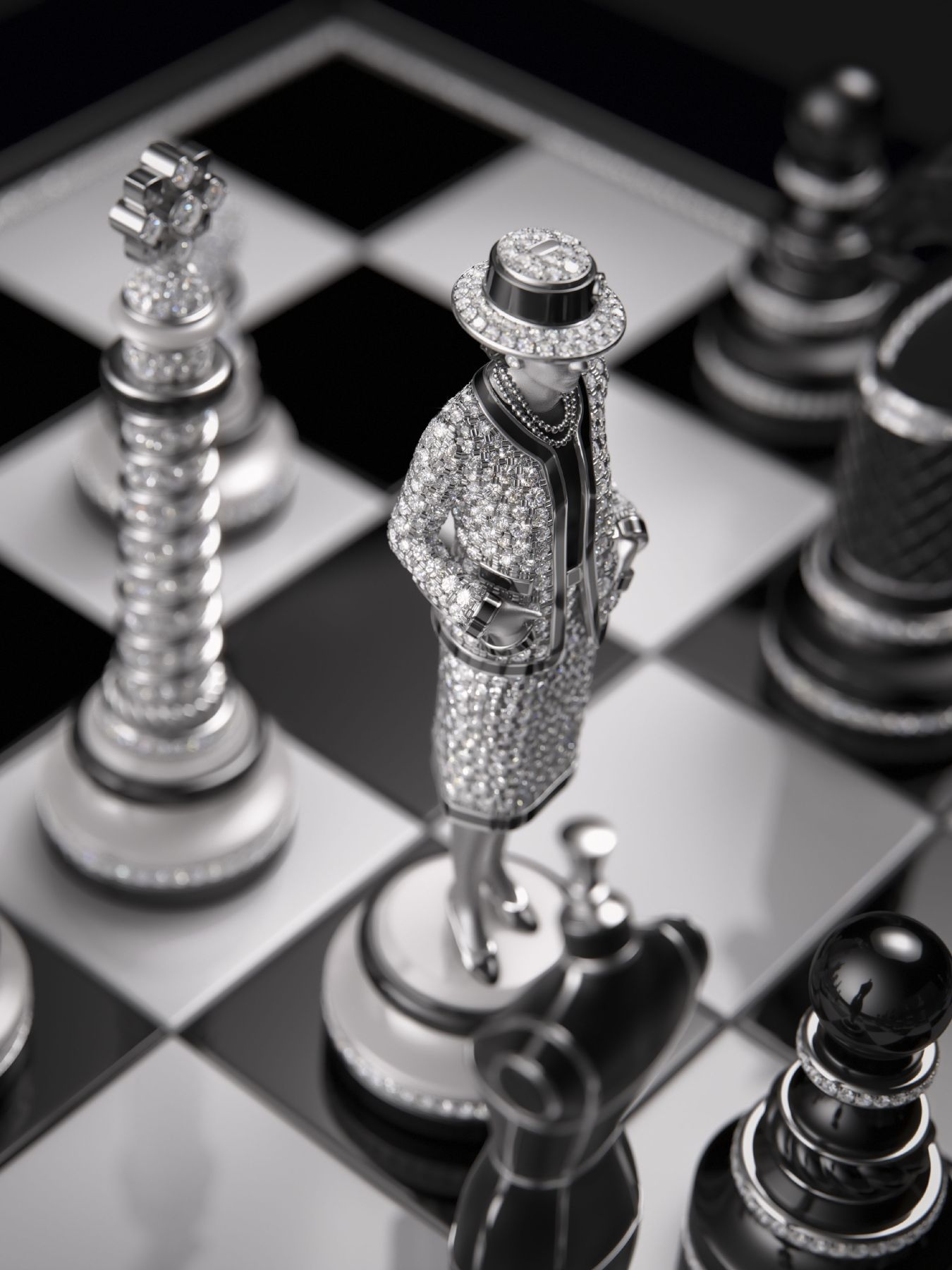
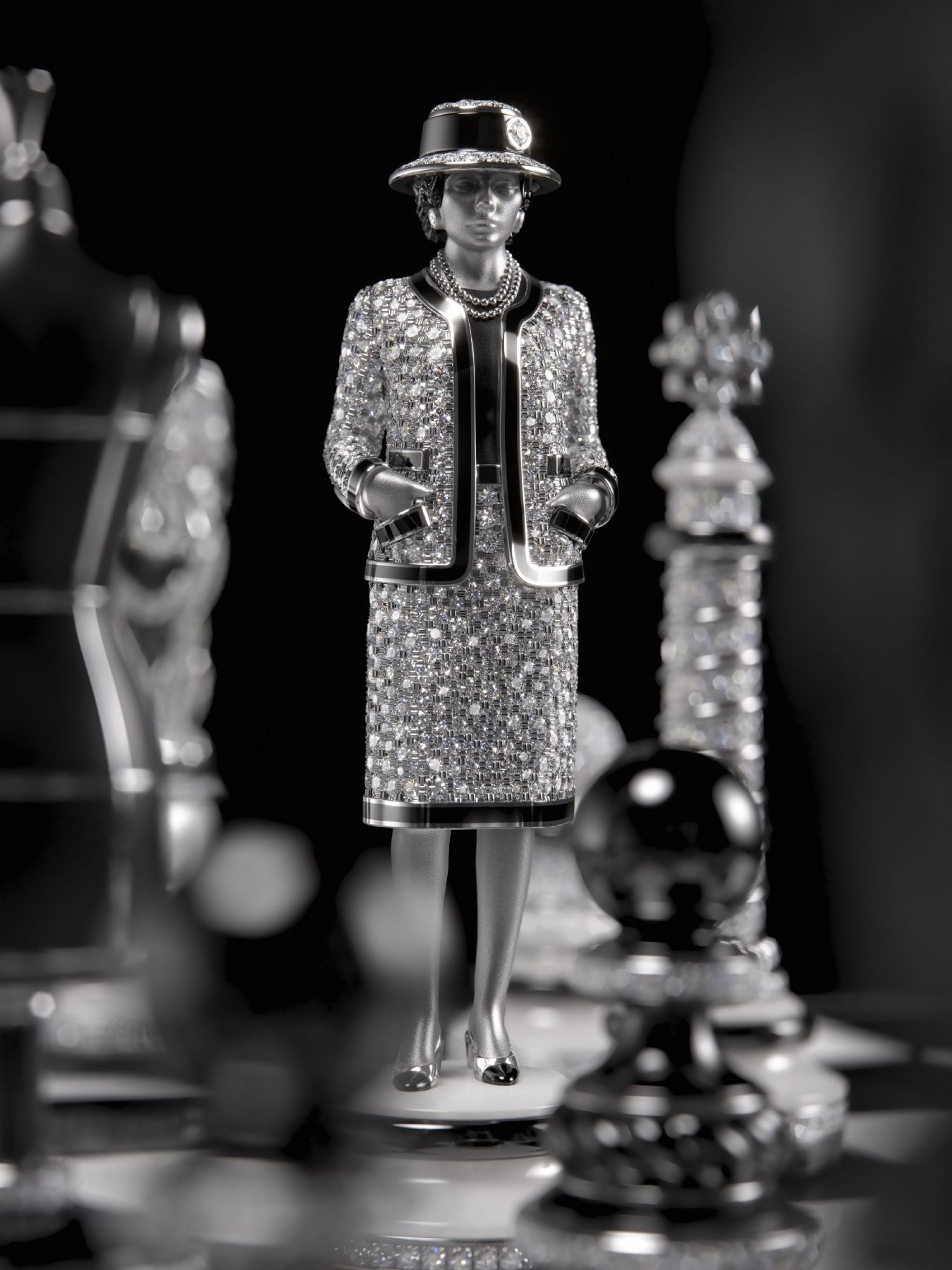
Exclusively crafted on a chess piece sold for 3.7 million Swiss francs prior to the show, the tweed-inspired gem-setting—entirely handmade—appears to be Chanel’s latest technical feat. This piece, the Queen, is none other than the embodiment of Gabrielle Chanel, whose dress is entirely set with diamonds, replicating the texture of tweed through a horizontal and vertical mesh pattern. Under the direction of Arnaud Chastaingt, director of Chanel’s watchmaking design studio, the chessboard—totaling over 110 carats—required 900 hours of setting and was crafted as a one-of-a-kind piece. This craftsmanship, soon to be patented by the house, is also featured on the Gabrielle Watch as well as on the Gabrielle long necklace from the same “Coco Game” collection
This piece, the Queen, is none other than the embodiment of Gabrielle Chanel, whose dress is entirely encrusted with diamonds, recreating the texture of tweed through a horizontal and vertical pattern (Chanel)
3. The Crystallized Osmium of the Hublot Big Bang Moonphase Impact Sapphire
Once crystallized, osmium takes on a pale bluish tint with almost liquid-like shimmer, giving the dial a rather unique luster (Hublot)
The use of crystallized osmium in this model—one of the rarest and most fragile materials in the world—does not go unnoticed, even though the brand had already explored this material as early as 2014. Considered one of the rarest metals in the world, osmium is also extremely dense, harder than platinum, and more valuable than gold. Its extraction involves a particularly complex process: it takes nearly 10,000 tons of platinum ore to yield just 30 grams.
Once crystallized, this metal takes on a pale bluish hue with almost liquid-like reflections, giving the dial a rather unique brilliance, like shimmering powder. Developed in collaboration with scientists, this technique limits production to just 30 pieces.
4. H. Moser & Cie’s Forged Quartz Fiber
Purer than fiberglass and more UV-resistant, quartz fiber is one of the industry’s most promising new materials (H. Moser & Cie)
Rarely seen in watchmaking, forged quartz fiber makes a striking debut at H. Moser & Cie. In collaboration with Reebok, the brand is launching the Streamliner Pump in two limited editions of 250 pieces each, in black and white. The material is produced through a complex process: fiber segments are arranged in a mold, compressed, then impregnated with resin before undergoing two firing cycles. Purer than fiberglass and thus more UV-resistant, quartz fiber is among the industry’s most promising new materials. Additionally, this watch stands out for its orange “pump” button used to wind the mechanical movement. In place of the crown, an anodized aluminum pusher transfers the energy from each press to the mainspring, simultaneously activating the power reserve indicator.
This Tuesday, the international press and industry professionals gathered at Palexpo in Geneva for the latest edition of Watches and Wonders Geneva, which runs through April 20. An event eagerly anticipated by an industry facing an unprecedented crisis.
At the helm of Hublot (LVMH) since September 2024, Julien Tornare aims to elevate the brand to the level of the five major players in high watchmaking. Doubling manufacturing space, strengthening innovation, recalibrating sponsorships—including withdrawing from the World Cup—and increasing communication around in-house watchmaking expertise: ambitions are high.