Watches & Jewellery
Ilaria Resta, CEO of Audemars Piguet: “We have developed a vision for 2040 aligned with the board”

At the head of Audemars Piguet since 2024, Ilaria Resta is accelerating the transformation of the family-owned brand. Between financial structuring, broader outreach to the general public, and investment in innovation, she explains the strategic vision for 2040 designed to secure growth.

Met in Le Brassus shortly after the presentation of the first-half novelties in Andermatt, Ilaria Resta, CEO of Audemars Piguet, looks back on her first two years leading the manufacture. Two years dedicated to structuring and consolidating this family business, during which she developed a genuine passion for watchmaking. She shares her vision of a brand that is more open to the public and reveals her priorities for the future.

After two years at the head of Audemars Piguet, what are your takeaways, and what have you learned?
First, I had to speed up my French learning! (laughs). It was essential, because it’s the language of watchmaking. My attachment to the company became very strong very quickly. Coming from outside the industry, I obviously wasn’t a horology expert. But the passion came extremely fast, as soon as I dove into the movements and the specialized books. It’s a field that pulls you in, that grabs you emotionally. These two years have been very rich and intense, not to mention the sociological, economic, and geopolitical changes happening around us. Adaptability and speed of reaction are fundamental today.
Newsletters
Cet article vous plaît ?
Inscrivez-vous à nos newsletters pour recevoir les dernières publications et analyses selon nos 4 thématiques:
This emotional side of the industry can be a trap and numb critical thinking. What do you think?

I am very vigilant on that point. But it’s a discipline I also apply to my personal life. Openness, diversity, curiosity about fields far removed from our usual interests—these are essential. Of course, certain professions require both emotion and expertise, but I believe the word experience is more important. It means being capable of facing unexpected events that teach you a lot. Expertise can blind you into thinking you know and control everything. At Audemars Piguet, I seek dialogue; I exchange with clients, the press, employees—I never lock myself in my office. Today, that's crucial. For this reason, the brand invests in art, music, and culture—fields that inspire and open us up to the world.
What is your assessment of the watchmaking industry, of this ecosystem? Where should it be heading?
I believe it needs to reconnect more with today’s society and better represent its diversity. Its codes, storytelling, its way of presenting products, and marketing have not yet fully integrated evolving societal expectations. The younger generation is living an unprecedented moment marked by ultra-fast access to information, amplified and personalized by artificial intelligence. In this context, our sector must stay attentive, open, and aligned with the public.
What concrete measures are you taking in this direction?
We must bring in talent from elsewhere to vary perspectives, and rotate roles. At Audemars Piguet we have a distinctive internal mobility policy. Highly specialized watchmakers, whose dexterity has been proven over time, bring precision and confidence. But moving them to a different workshop—closer to or further from their core expertise—brings a fresh perspective, enthusiasm, and enrichment. Once again, experience brings renewal, regenerated approaches, and new ideas.

Was this philosophy already present before you, or did you introduce it?
It was already present, but I wanted to formalize it and include it in our strategy. That means, at the HR level, we plan role and career changes. We also accelerate contact between manufacture employees and clients. During the AP Social Club events, about forty employees were able to do this. It sparked new approaches.
What did you learn from this?
I learnt that clients have a huge appetite to see what happens behind the scenes—to witness the creative process, understand manufacturing, observe watch assembly.I also want to share with them the launches we’re planning three to five years ahead. The mistake would be to remain locked in preconceived ideas about what clients want, limiting ourselves to what they already know. Their curiosity is much broader today. It’s up to us to open new horizons for them and show what’s possible.Explanation feeds passion. That’s also why we open our masterclasses to people who are not clients. Why? Because they may become future buyers—or future talents for the industry. Sharing our know-how and opening the doors of the watchmaking world offers a powerful experience, sometimes even more important than simply owning a watch.
Does this mean you will reproduce these experiences as mini-workshop shows around the world or further open the facilities in Le Brassus?
Both. During the 150th anniversary celebrations, we saw record attendance (50,000 cumulative visitors) of enthusiasts and clients who came to Shanghai and Dubai for our exhibitions. It was a real gamble.
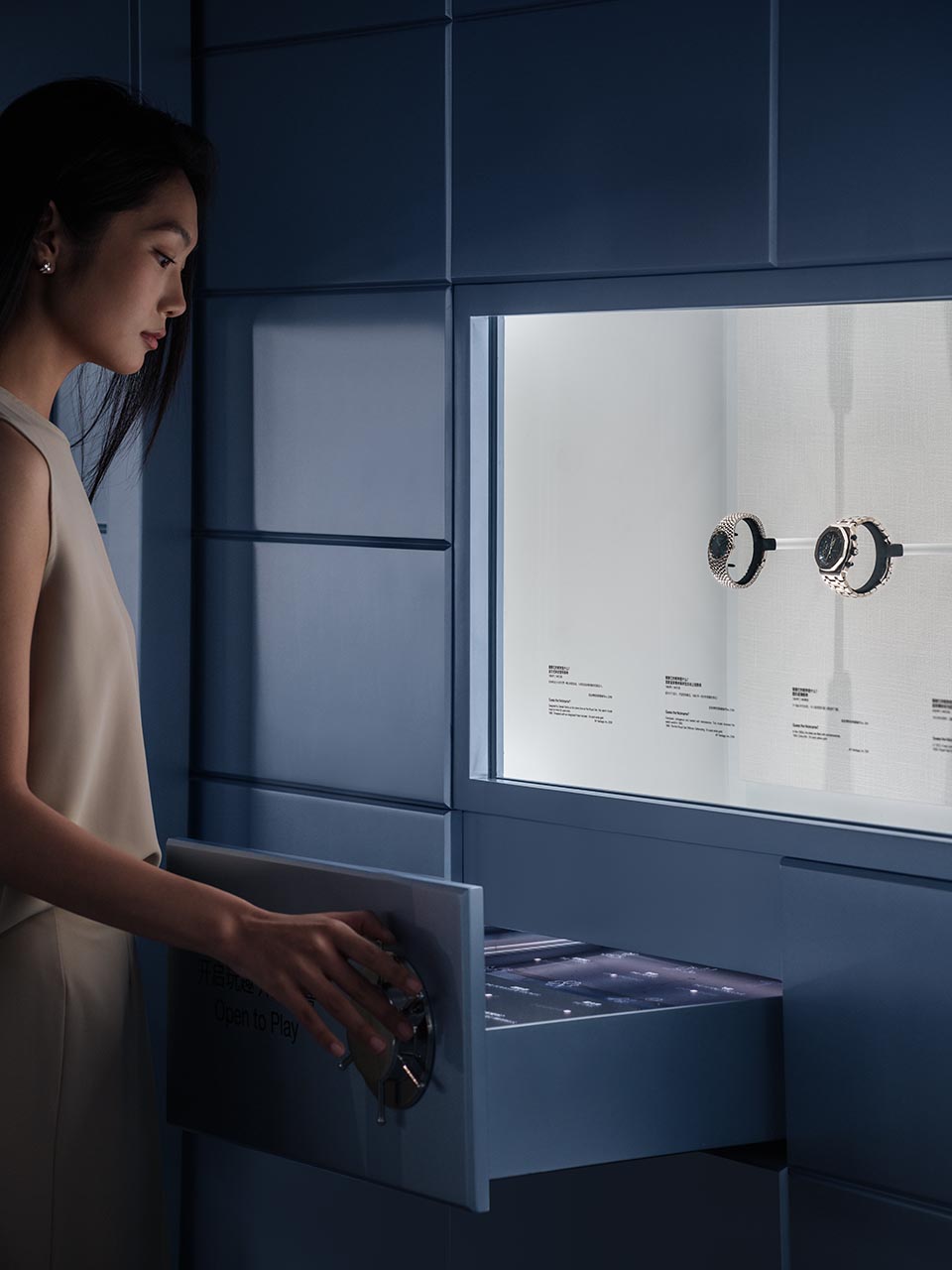
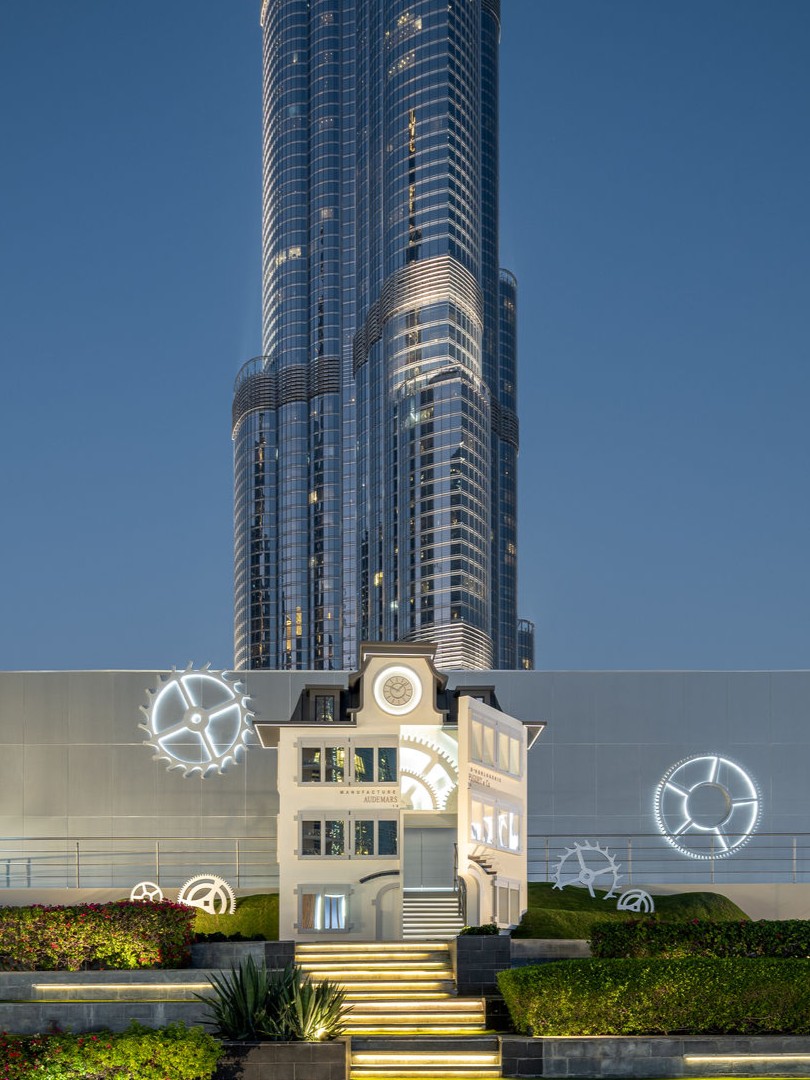
Lors des célébrations des 150 ans de la marque, les expositions de Shanghai, à gauche, et Dubaï, à droite, ont connu des affluences record (50 000 visiteurs cumulés) d’amateurs et de clients (Audemars Piguet)
Was it also a financial gamble?
Yes, it’s a significant investment (she won’t give figures) to build such an installation and run it with watchmakers dedicated to the workshops. Opening the doors to everyone was also a gamble, because we didn’t want to create frustration. In the end, the opposite happened. Visitors understood why our production is limited (around 52,000 watches per year) and why our watches cost what they do. They were very happy to feel part of the Audemars Piguet world. Wherever we have AP Houses, this model will be replicated in the form of mini-exhibitions.
What did you learn from working in this industry, coming from the mass-market world?
Time management, especially the much longer development times in watchmaking, and the number of hours spent with clients—this is very important. But I also noticed how interdependent this industry is. The energy within this ecosystem is exceptional and unites everyone—suppliers, brands, clients. I saw this at Dubai Watch Week. We all meet, exchange, collaborate. I look forward to experiencing this again at Watches and Wonders Geneva.

Over two years, what has changed?
Looking at the plans established at the end of 2023, a lot has changed since: my team, the way we work, the product plan, and even the retail concept.
What formulas from the mass-market world have you applied?
Market analysis capabilities, and combining intuition with data. We brought in a lot of data at Audemars Piguet, we structured it, then applied it to the supply chain, products, and client files. Intuition is essential for ideas, but data is crucial for understanding trends and market movements—for optimization. All this strengthens the business. My background is in building solid company structures—financial, operational, data, talent management. Everything you don’t see, but which forms the foundation. What makes a company successful isn’t only the attractiveness of the product you see, but the structure behind it. I am an economist; I must ensure the company’s financial solidity in the face of all potential crises.
Is it a general trend in luxury to have more methodical managers at the top?
It’s a combination. We must keep the intuitive, emotional, irrational side—by nature, that’s who I am—but we must also create value for shareholders, clients, and employees. My mission is to prepare Audemars Piguet to be resilient in any situation. We therefore developed a vision for 2040 aligned with the board of directors, because our constant concern is to remain relevant—today and fifteen years from now. We cannot predict the future, but we imagined different scenarios to be ready for anything, including extreme situations. For example, having no revenue for more than 12 months. The company must be prepared. Another important point is ensuring there will be enough passion for watchmaking worldwide to attract future talent to the industry.
What is the biggest challenge in your view?
Ensuring the attractiveness of an industry that makes objects that are not useful but have high emotional value. For this, you must educate and open up. I dream of watchmaking being taught in schools the way art is taught. I’m reaching out to the education world, but this must be done together with the industry.
You mentioned a 10% increase in revenue. Was this largely due to a rise in the average price?
It’s a combination of factors: the increase in the number of complicated watches, organic volume growth, and a slight price increase.
In 2026, are you aiming for the same growth?
Double-digit growth every year is not the main objective. I’m aiming for steady structural growth, supported by increased volumes in complications and future innovations. The pocket watch and the Neo Frame jumping-hour watch presented recently generated significant enthusiasm. We need to be able to support these productions.
What was the client feedback?
Very positive! The enthusiasm around the pocket watch surprised us, especially from the younger generation. The first one was purchased by a woman. The Neo Frame is a new line that will continue, I’ll gladly bet on it, because it appeals to a wide range of clients and its shape allows for creativity.
Do you confirm a slight general recovery across markets?
Yes, including in China, gradually. India has enormous potential. What matters is identifying pockets of growth—not only in terms of markets but also audiences—and on this point, women have a major role to play. But 2027 will truly be the year of recovery for the luxury market, which I estimate at around 3%.

Partager l'article
Continuez votre lecture
Business
Audemars Piguet Acquires Majority Stake in Inhotec SA
Ensuring the independence of their own production chains now seems to be a must for luxury brands. Renowned watchmaker Audemars Piguet has just acquired a majority stake in Inhotec SA, a Swiss precision micromechanics factory and existing supplier to the brand.

Watches
Ilaria Resta, CEO of Audemars Piguet: ‘These rumours are unfounded.’
While Audemars Piguet is in Hong Kong for its 150th anniversary celebrations, Luxury Tribune was able to ask Ilaria Resta about the rumours of her departure.
Newsletters
Cet article vous plaît ?
Inscrivez-vous à nos newsletters pour recevoir les dernières publications et analyses selon nos 4 thématiques: