After nearly two decades shaping IWC’s creative identity, Christian Knoop reveals the uncompromising philosophy behind the brand’s most recognisable designs. For him, pure design is not minimalism. The Ingenieur is only one example.
Christian Knoop, Creative Director at IWC (IWC)
Owning several iconic models for a watch brand is a Holy Grail that few companies can boast in their heritage. IWC Schaffhausen, owned by the Richemont Group, is not always the first name that comes to mind. But delving into its heritage reveals collections that can claim to be instantly recognisable: the Portugieser, the Pilot's Watch and the Ingenieur. These are models that Christian Knopp, Creative Director at IWC, has had to rework over the course of his seventeen-year career. And that's no easy task when some, like the Ingenieur, were born from the fabulous imagination of star designers such as Gérald Genta. In an exclusive interview, he talks about the delicate exercise of seeking pure design, reworking an icon, but also how, with the younger generation, he is enriching the IWC style in the 21st century.
Archivnummer: IWC93555
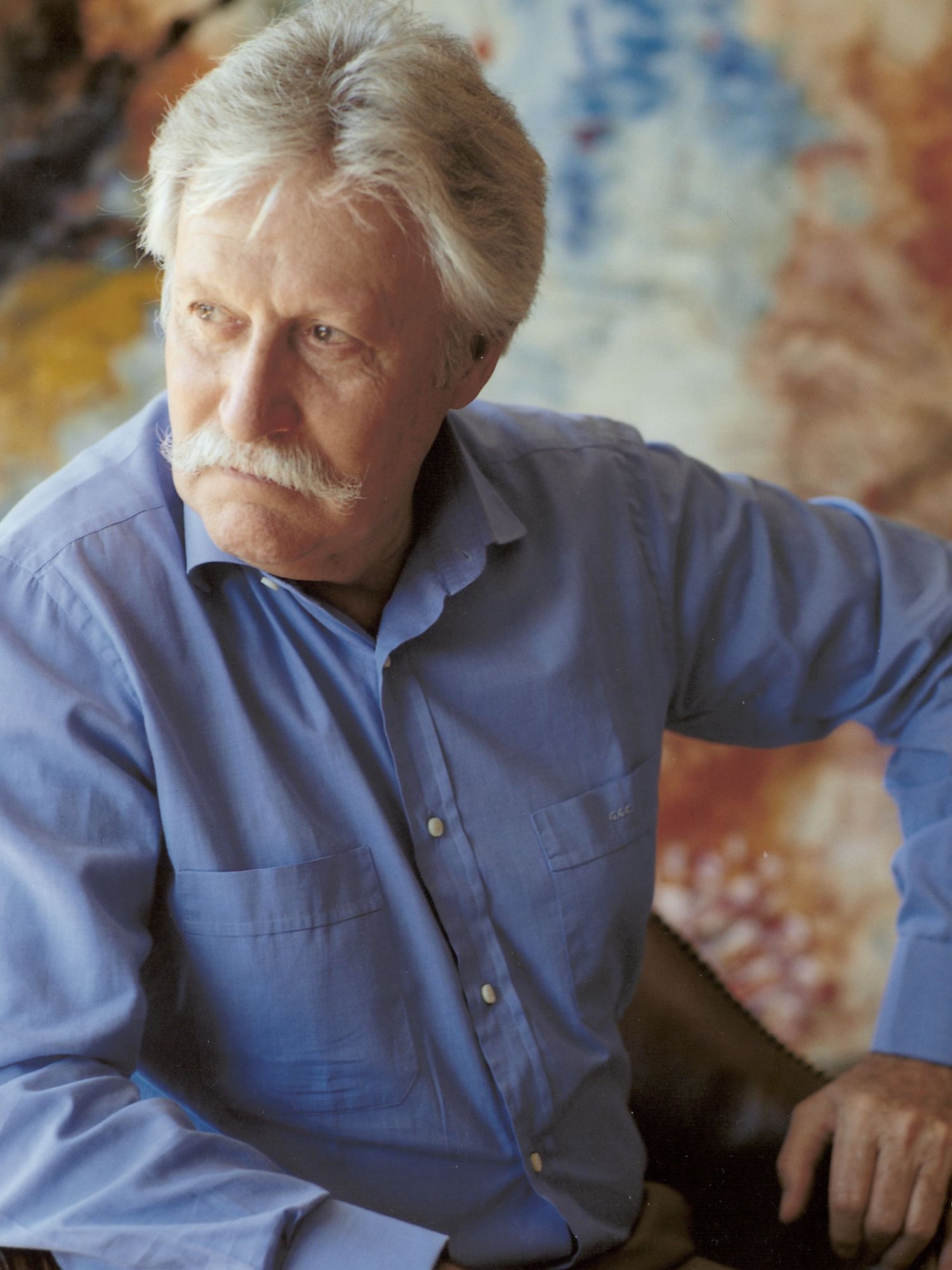
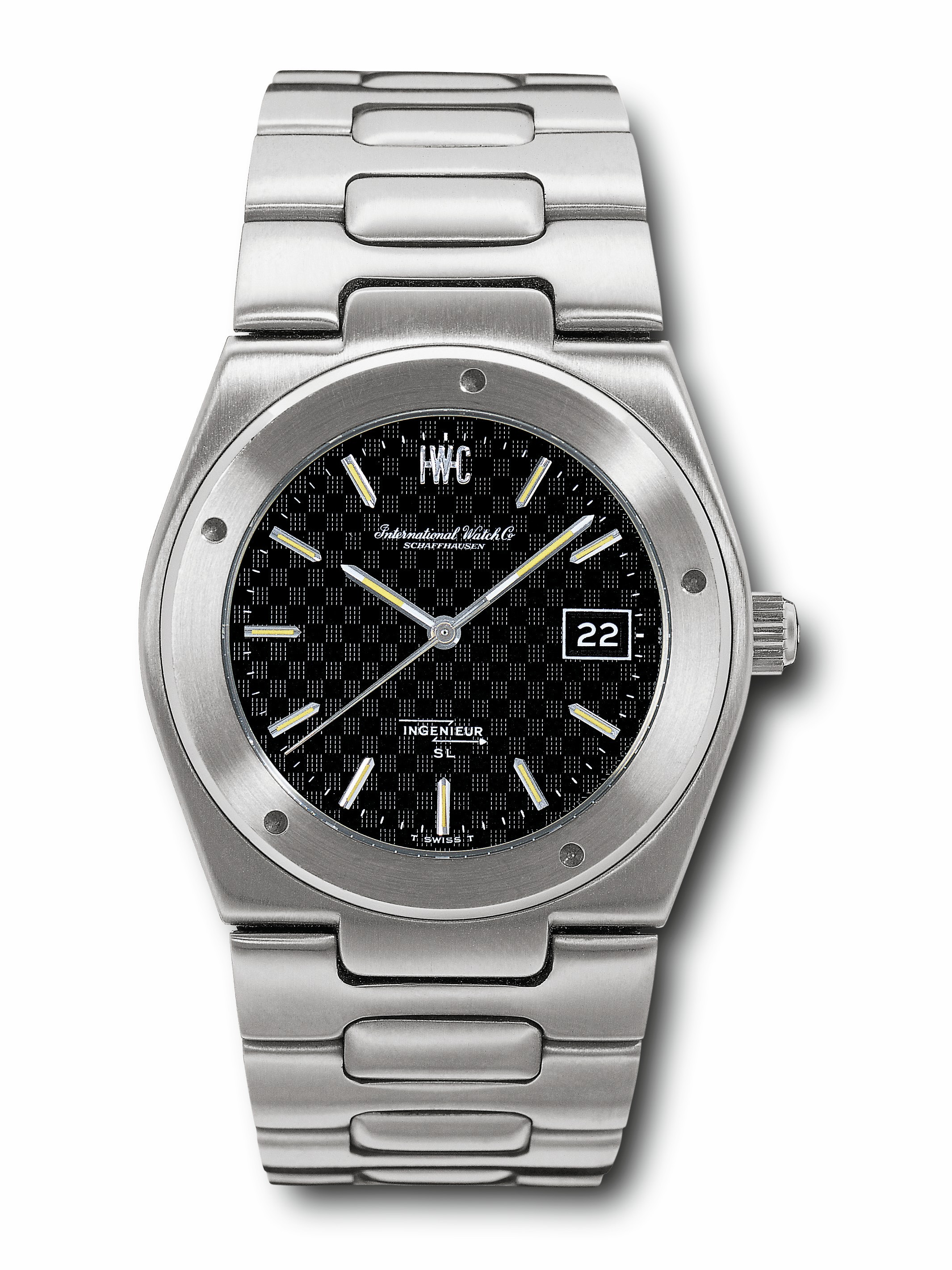
On the left, Gérald Genta, whose design codes left their mark on their era, notably with the IWC Ingenieur model, which will celebrate its 50th anniversary in 2026 (Gérald Genta Heritage Association/Ingenieur SL Automatic (1976), Ref. 1832)
Next year, IWC will celebrate the 50th anniversary of Gérald Genta’s design of the Ingenieur. Recently, IWC relaunched several new versions. How did you make sure that the heritage was respected, Was this framework restrictive for you, or was it stimulating?
Christian Knoop. For me, it’s stimulating, because I see the Genta design of the Ingenieur for what it is: a very recognizable product with a very strong signature. But in my opinion, like many icons, it’s not a perfect design in every respect. What we inherited from Genta are these incredibly strong design codes. However, when we looked at the design more closely, we also saw opportunities for change and improvement. So we refined the case architecture, the lug length and attachment, the bracelet width, the crown protection, the dial layout and the integration of the new logo, in addition to introducing a new movement. It was about elevating the whole watch while keeping its spirit intact.
The current Ingenieur model features several innovations, including the length and attachment of the lugs, the width of the strap, the layout of the dial and a new movement (IWC/INGENIEUR AUTOMATIC 35, REF. IW324903)
You presented this new Ingenieur to Evelyne Genta. That must have been a decisive moment. How did she react, and what did it mean for you?
I was a bit nervous, because she is very strong, outspoken and direct. She looked at the prototype and was immediately very pleased, which was already a big relief. When I asked if she realised how much we had changed, she said of course—and added that this evolution would absolutely be in the spirit of her husband. For Gérald Genta, simply relaunching a design from 45 or 50 years ago would never have been an option; his mindset was always to evolve. For me, her reaction was the biggest compliment and a powerful confirmation that our approach—respecting the original codes while clearly pushing the design forward—was the right one.
Was this the first time you were able to “touch” something as iconic as this—an object created by a legendary designer?
No. We’ve worked on the Portugieser collection, on the Pilot’s collection—these are also very precious icons of the IWC Schaffhausen brand, some of them even older than the Ingenieur. For me, it’s not so much a question of whether it’s Mr Genta or someone else. What matters is whether it’s a strong design. What I always try to imagine is how our predecessors at IWC—now more than 150 years old—thought. They didn’t worry as much about the past as we do today. They were bold, visionary people creating new things. That “relaunch” phenomenon is quite specific to our times. Historically, this company has been led by very young managers. F.A. Jones was 27. The son of Mr. Rauschenbach was 23 when he took over in the 19th century. I think we sometimes need to look at their work with different eyes—not as something purely historical, but as the work of brave entrepreneurs and visionary engineers. That’s what I try to remember when we put our hands on these products.
Newsletters
Cet article vous plaît ?
Inscrivez-vous à nos newsletters pour recevoir les dernières publications et analyses selon nos 4 thématiques:
NewsGen ZAnalysesTrends to watch
At the time, the Ingenieur collection was actually a spectacular failure, because it didn’t quite hit the right audience. During your 17‑year career at IWC, have you had similar experiences, collections you designed that were not immediately understood?
I think the best example is probably the Portofino. Portofino is a collection that doesn’t receive a lot of attention, yet it is incredibly popular and commercially very stable. It just doesn’t get much of the spotlight. We relaunched Portofino in 2011, building on things that had already been done in the 1980s and 1990s. It’s a very important collection for us as a brand. It may not be edgy enough, and it’s perhaps not the first collection that collectors go for. Rather, it is often people’s first watch.
You often speak about “pure design” that doesn’t suffer compromise. What is your definition of pure design?
I don’t like to reduce it to simplicity, because simplicity can sometimes be banal. Achieving purity requires effort.
Effort, but not compromise?
Effort can sometimes include compromise, yes. But for me, effort means striving for a perfect product, a perfect balance. That can result in a very reduced execution. Purity is also something that is technically hard to achieve, and it requires significant effort, craftsmanship, and know‑how. A good example is our Portugieser dials: wonderfully clean, very open dials with a lot of clarity in their presence, but they require a very elaborate technical process to produce. You find the same with the Ingenieur case. When you look at the execution of an Ingenieur metal case, it appears pure, but it is realized through a very high level of engineering, smart construction, and a high level of craftsmanship in finishing and overall perfection.
As an industrial designer, which period in the history of design fascinates and inspires you the most?
I’m a child of the 1970s, so 70s design, which surrounded me as I was growing up, had a big influence on me. It was the time of big names such as Achille Castiglioni, Mario Bellini, Joe Colombo, and others. These were the designers who laid the foundations for what I found interesting and exciting as an industrial designer, and for my decision to become one myself. Looking back, what I find especially interesting about that period is that it was very forward‑looking and bold. Designs were less influenced by history and made extensive use of new technologies.
And today? Is it easy to define a style?
Our times are marked by a very different mindset in society—much more pessimistic than back then. In the 70s, there was a more optimistic, forward‑looking attitude. In terms of aesthetics today, all trends run in parallel. There isn’t one single fashion style; instead, multiple fashion styles coexist in parallel. It also means there isn’t a single “right” way to go. That’s actually a good thing, because it creates room for creatives.
So are you enjoying more freedom today than 20 years ago?
I would say yes, definitely. We have more freedom. What’s exciting at IWC is that we have such a rich portfolio of products. They are all united by the same brand DNA: engineering and pure design, but they have very different aesthetic expressions, from very modern and technical to more classic and elegant.
We spoke about pure design, but there is also “good design.” You often talk about that. Is it the same thing? What do you mean when you say, “This is a good design”?
For me, good design is always relevant design. Especially today, we’re surrounded by new products every day. In the watch industry, if you look at Instagram and social media, there are new watches every day and every week. In the end, what makes the difference between just another beautiful watch and a truly successful product is identity, character, recognizability. That comes from relevant design. Beauty alone is not enough. Relevant design rests on several aspects. On a functional level, it must work ergonomically; it must function well and be legible—these are principles we inherited from people like the great designers of the 70s. It must use materials responsibly, be sustainable, and be of high quality.
Christian Knopp has successfully reworked several iconic models such as the Portugieser above, the Aviator and the Ingenieur (IWC/Portugieser Automatic 40, Ref. IW358401)
Is that what you tell young designers when they want to join your team in their twenties? What advice do you give them? And how do you see this new generation coming with new ideas?
We actually do this quite regularly. Within Richemont we have the Richemont Creative Academy, which has existed for more than 20 years. It’s in Milan, a one‑year master’s programme with students from all over the world. We educate future talent for the Richemont Group, and we offer a programme called “Luxury Accessories Design,” which includes training in watch design, jewellery design, and leather accessories—covering what we need in the different maisons of Richemont. There are always about 20 students per year who go through this one‑year training. Part of it is an internship in one of the maisons, and we also teach them at IWC, working with them on projects. So your question “how to nurture the next generation” is very relevant. It’s not only about giving them the technical ability to design a proper watch or a piece of jewellery. It’s also about making them aware that, as designers, we must bring magic to the product.
You can have a very high‑quality product with solid engineering that meets all the functional needs of a customer, and still the person doesn’t feel passionate about it. The designer is the one who adds that passion. Product managers and engineers alone can’t deliver that. You need designers to bring the unexpected, human, emotional, and sensitive dimension.
Can this magic be learned as a designer, or must you be born with it?
It’s always very difficult to define. To a certain extent, you can learn and develop it, and you can work on it. But some people find it easier; they just have it in them.
What do you learn from the younger generation?
They obviously bring a very different skill set to the table, especially when it comes to digital tools, which we might not have grown up with in the same way. They also have a different way of perceiving culture. They bring cultural influences not only from their home countries but also from artists and creatives I sometimes don’t follow or even know. Earlier we were talking about the designers of the 1970s—they don’t necessarily know those names, but they know other designers I find super interesting. They bring their friends, their networks, the creatives they are following, and they present this to the team. That’s how we shape the future of the brand together and also educate the next generation of creatives.
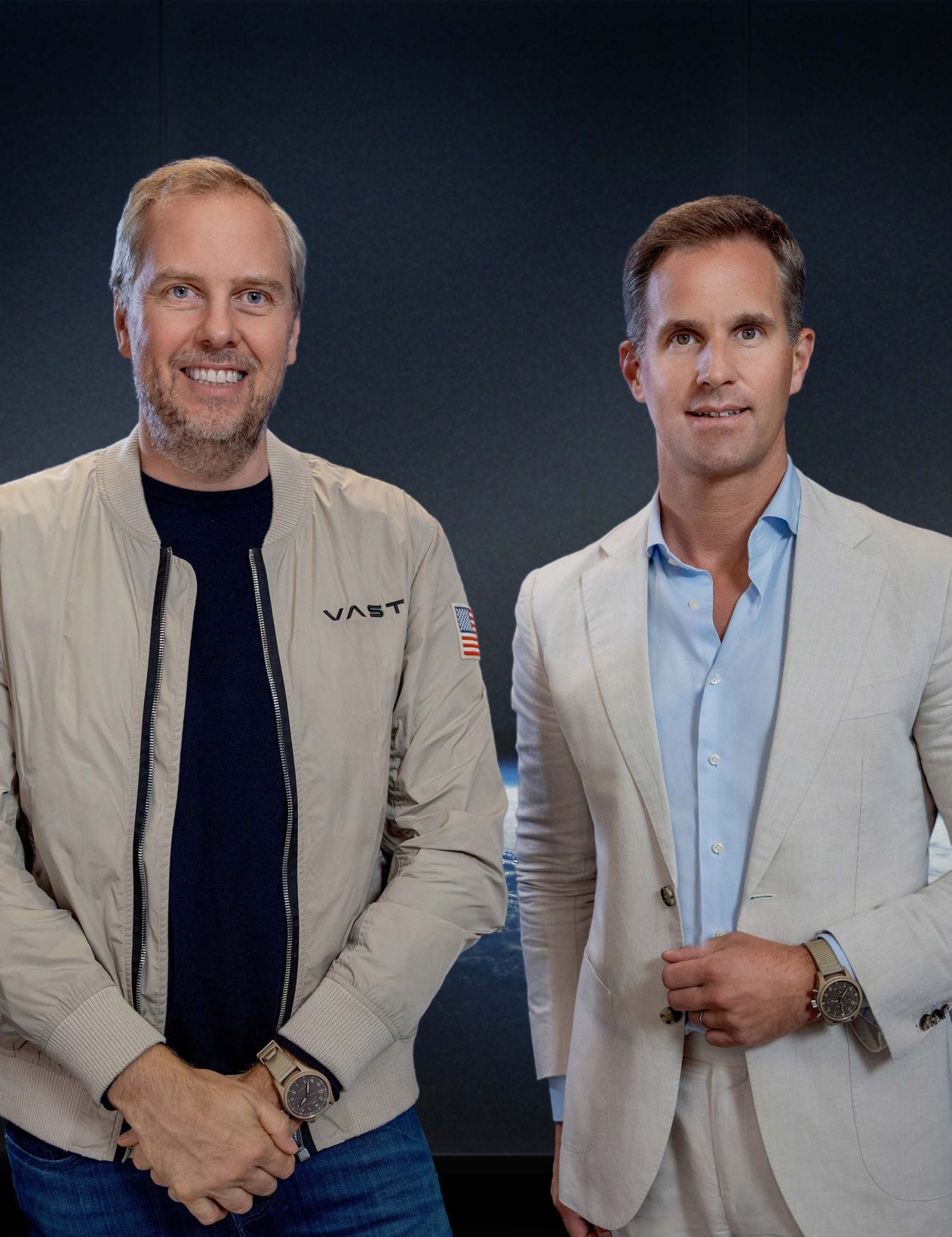
On Wednesday, the Swiss watchmaker announced its partnership with American company Vast, a specialist in space habitation technologies. It will become the “official timekeeper” for future orbital flights.
The recent reeditions of the iconic Portugieser and Ingenieur models have allowed Richemont Group’s IWC Schaffhausen to refocus on its core values. The upcoming F1 film directed by Joseph Kosinski, starring Brad Pitt and set for release in June, is expected to provide the brand with the momentum it seeks.