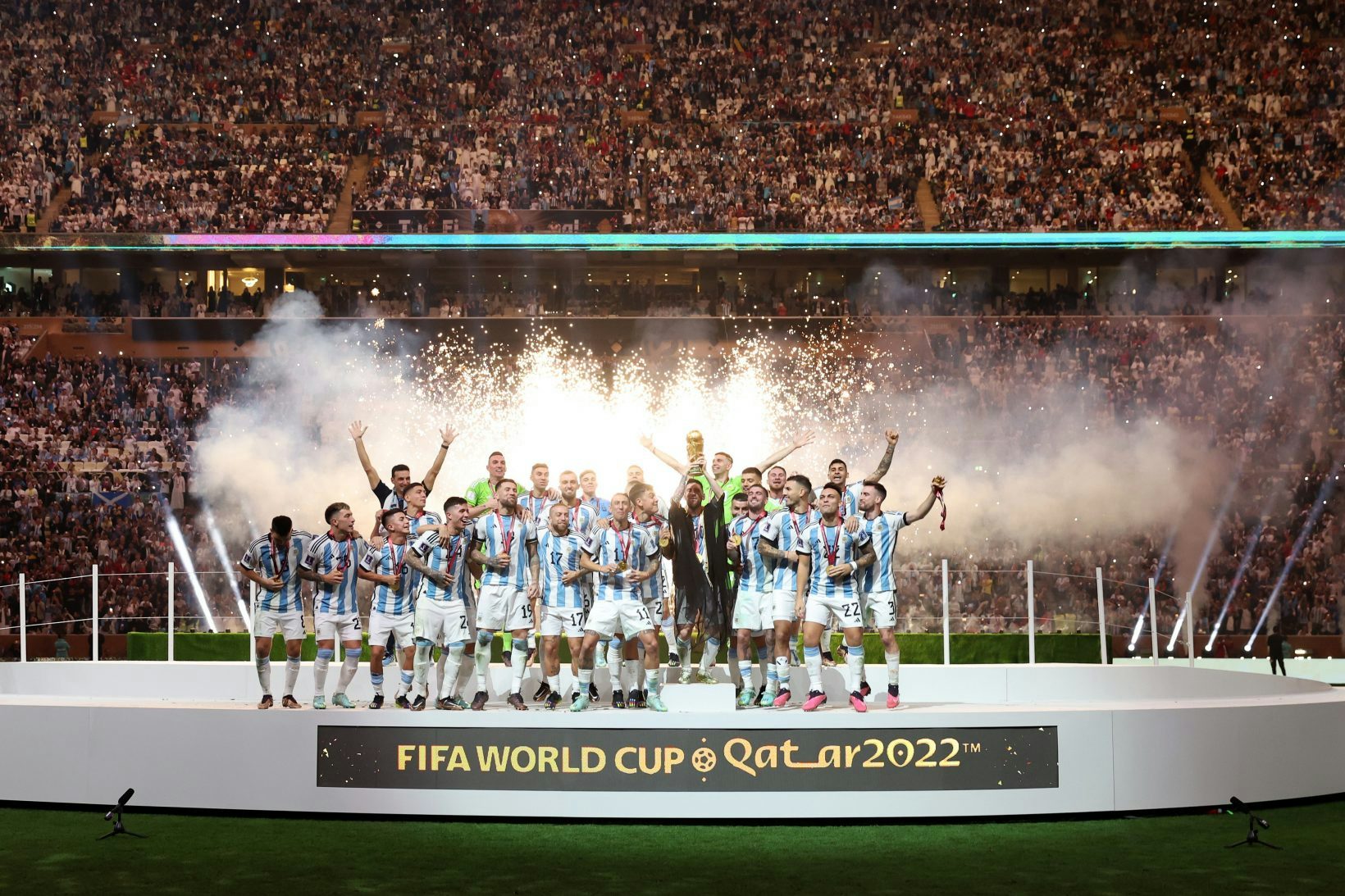
The 2026 FIFA World Cup is about to kick off. On June 11, the whole world will be in front of their screens to watch the event. According to FIFA, the tournament is expected to attract more than 5 billion viewers in total.
Jude Bellingham has partnered with Louis Vuitton. He features in the brand’s menswear's Spring/Summer 2026 pre-collection campaign designed by Pharrell Williams (LV)
For brands, the stakes are enormous. According to FIFA, the 2026 World Cup is expected to attract a cumulative total of over 5 billion viewers, a record for a sporting competition. Thanks to an expanded format featuring 48 teams and 104 matches, this year’s World Cup is expected to enable the organisation to generate nearly $13 billion in revenue over the 2023–2026 cycle. In this globalised attention economy, footballers have become much more than just athletes: they now represent media platforms in their own right.
Newsletters
Cet article vous plaît ?
Inscrivez-vous à nos newsletters pour recevoir les dernières publications et analyses selon nos 4 thématiques:
NewsGen ZAnalysesTrends to watch
Luxury’s New Playing Field
Luxury houses have understood this perfectly. Whilst the sector has been experiencing a degree of turbulence and a market slowdown over the past two years, sport appears to be a powerful lever for reaching new audiences. The figures bear witness to this acceleration. According to data from Luxurynsight published in 2025, the number of partnerships between luxury brands and the sporting world rose from 19 in 2019 to 96 in 2025, a fivefold increase in just six years.
Jude Bellingham in Louis Vuitton’s “The Getaway” campaign (LV)
Football now accounts for the bulk of these deals. In June 2025, Dior appointed Kylian Mbappé as its global ambassador. With estimated earnings of nearly $95 million a year, a significant portion of which comes from commercial contracts, the captain of the French national team has become one of the most lucrative figures in world sport. For Dior, the appeal is enormous: Mbappé offers simultaneous access to European, American, African and Middle Eastern markets, whilst attracting a clientele that is generally younger than that of traditional luxury brands. In addition to his fashion partnership, he has been a Hublot ambassador since 2018.
The same logic explains the interest surrounding Lamine Yamal. At just 18 years old, the Spanish prodigy is already one of the most sought-after figures in global marketing. When he was spotted, during a private outing, wearing a rose gold Patek Philippe watch on his wrist, the image made the front pages of the sports newspapers.
Cristiano Ronaldo is a brand ambassador for Jacob & Co. Together, they have developed a co-branded watch collection called Epic X CR7 (Jacob & Co.)
Jude Bellingham is another player who has partnered with a luxury brand, in this case Louis Vuitton. He features in the brand’s menswear range, notably the Spring/Summer 2026 pre-collection designed by Pharrell Williams. As for Cristiano Ronaldo, he has been a long-standing partner of the brand Jacob & Co. Together, they have developed a co-branded watch collection, Epic X CR7, centred around two iconic models: “Flight of CR7” and “Heart of CR7”.
Although Jacquemus will be dressing the French team during training sessions and official events, the trend is shifting. Brands prefer to invest directly in the players, rather than in the sporting event itself.
Players Matter More Than Competitions
This reflects a profound shift in strategy: brands are no longer seeking merely visibility, but rather a lasting association with athletes capable of generating content all year round.
The business model of sports sponsorship has changed. An official partnership with a competition offers exposure that is limited in time. A player such as Mbappé or Yamal, on the other hand, generates millions of daily interactions on social media and engages with consumers well beyond the four weeks of the competition.
Paradoxically, the 2026 World Cup has few luxury brands among its official partners. Yet luxury has never been so present in football.
Key Points:
• The 2026 FIFA World Cup is expected to attract more than 5 billion cumulative viewers and generate nearly $13 billion in revenue for FIFA, making it one of the most powerful marketing platforms in the world.
• Luxury brands are increasingly investing in football to reach new audiences. Dior, Louis Vuitton, Hublot and Jacob & Co. have all partnered with global stars such as Kylian Mbappé, Jude Bellingham, Lamine Yamal and Cristiano Ronaldo.
• Sponsorship strategies are evolving: rather than focusing on tournaments themselves, luxury brands are increasingly backing individual players who can generate visibility, engagement and content year-round through social media.
Indulge in the 2026 World Cup Final in some of the most exclusive settings in the world? A New York hotel has made this a reality for guests willing to shell out a million dollars.
As Argentines celebrate their World Cup title, the country wants to believe in a saving grace that will help turn around the economy, in crisis for years. However, some of the luxury sectors do not seem to have waited for this victory to find their audience, as some counter-intuitive consequences of inflation seem to abide by no rules.