
Prada has come under severe criticism for its new range of ‘Sandals' that bear striking resemblance to ‘Kolhapuri Chappals’, a traditional Indian footwear. Presented during the recently concluded Milan Fashion week, as part of its Men’s Spring/Summer 2026 collection, which is co-designed by Miuccia Prada, and Raf Simons, Prada gave no credit to the Sandal’s Indian origin.
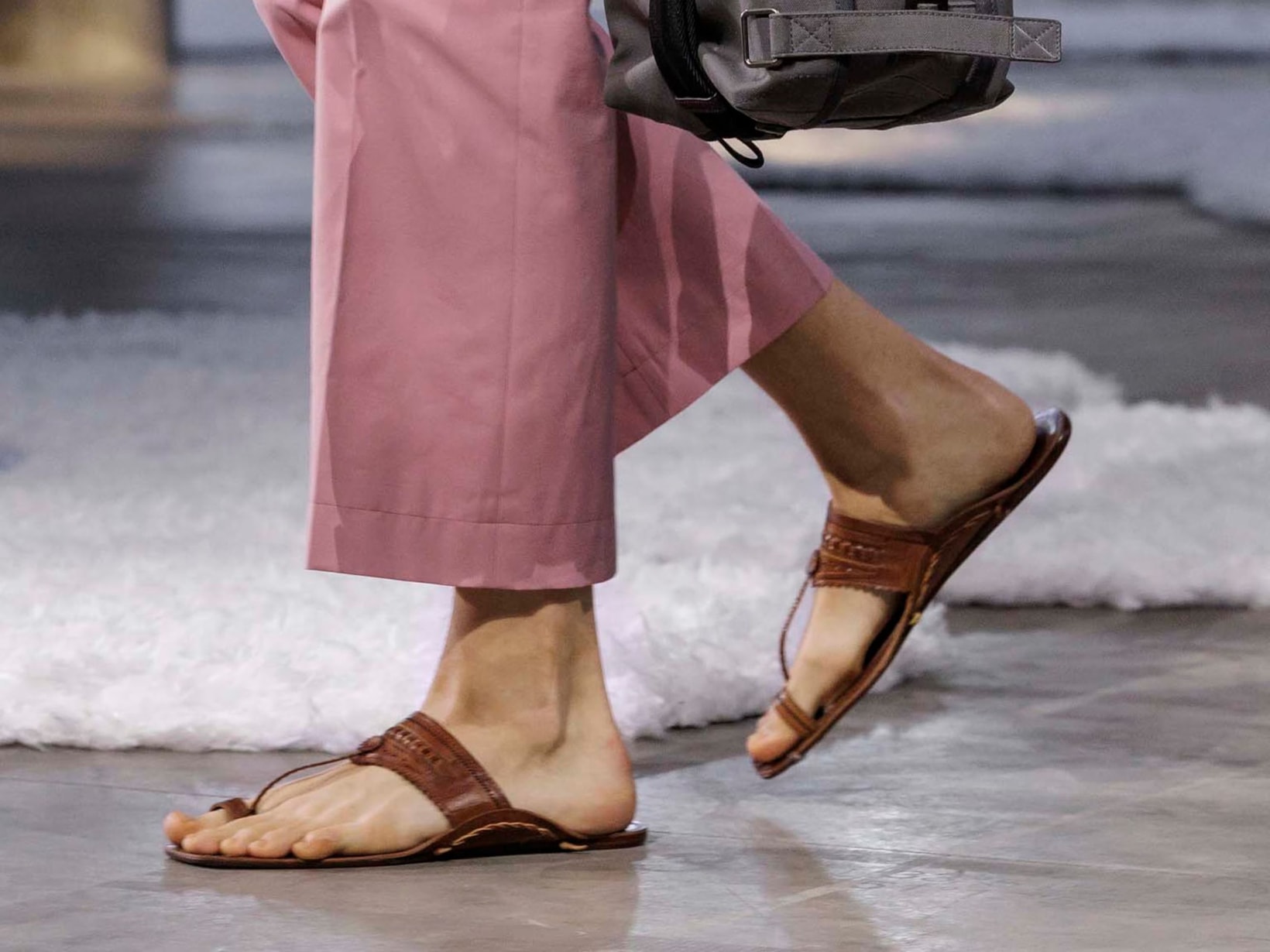
This omission drew backlash against Prada from luxury consumers on social media and in the Indian Press, with accusations of the brand carelessly plagiarising India’s artisanal heritage. In response to the growing criticism, a few days after the show, Lorenzo Bertelli, Prada Group’s head of corporate social responsibility, issued a letter acknowledging India’s rightful craft and Prada’s folly.
Kolhapuri Chappals, distinguished by their signature toe-ring, have been traditionally handcrafted in India since the 13th century. Their comfort and understated simplicity have made them popular across generations and social-strata. Even today, thousands of craftspeople in Kolhapur, the Indian city from where the footwear derives its name, hand-make them in modest, bare-bones workshops; spaces that are defined more by time-honored skills than by modern machinery or hyped pricing. The original Kolhapuri Chappals, widely available across India, sell for the equivalent of CHF 10-40.
While the western luxury industry revels in fine narratives woven around its products, it tends to fall short on responsible crediting and true inclusivity. This isn't the first time India’s expertise has been sidelined. Many western luxury houses continue to rely on India’s centuries old savoir-faire. While some choose to keep that part of their supply chain hidden under non-disclosure agreements with the Indian ateliers, thankfully others have evolved and do not hesitate to acknowledge it.
One such brand is Louis Vuitton, which made a visible effort to embrace creative inclusivity at its Men’s Spring/Summer collection presented at the recently concluded Paris Fashion Week. The brand demonstrated a thoughtful multicultural collaboration that included Indian artists, whose contributions were neither overlooked nor obscured. The show featured an original score composed by Oscar-winning Indian musician A.R. Rahman, and a striking runway design conceived by Indian architect Bijoy Jain. Both were present at the show as their expertise were professionally commissioned and publicly acknowledged. Louis Vuitton’s authenticity stood out as a conscious act of cultural inclusivity.
While Prada’s misstep is a clear indication that the western fashion and luxury industry must evolve their approach to creative sourcing, India too, must strengthen its efforts to protect its heritage. For instance, the Kolhapuri Chappals bear only local IP protection, and a Geographical Indication (GI) tag - recognising their regional origin, which may be insufficient to protect the craft’s legacy and financial rights, globally.
Partager l'article
Continuez votre lecture

Business
Ahmedabad and Pune: India’s Next Luxury Hubs?
Ahmedabad and Pune, two prominent metro cities in western India, have long been home to some of the nation’s ultra-wealthy population. These heritage and culturally rich centers are steadily embracing modern influences and building a global profile. But can they emerge as India’s next major luxury markets?

Jewellery
Gold Jewellery: India Cuts Import Duties to Boast Sales
India has lowered import duties on gold jewellery from 25% to 20%, bringing some relief to foreign jewellery brands seeking market expansion in the country. Bvlgari, Cartier, Tiffany and Chopard are some of the major foreign brands that sell jewellery in India.
Newsletters
Cet article vous plaît ?
Inscrivez-vous à nos newsletters pour recevoir les dernières publications et analyses selon nos 4 thématiques: