Business
The Global Retail Market is Expected to Reach $142 Billion by 2030

By Eva Morletto05 mai 2026
The network of mono-brand stores is confirming its central role in the luxury economy. According to data from Research and Markets, reported by the Italian media outlet Milano Finanza, this segment is worth $107 billion in 2026 and is expected to reach $142 billion by 2030, with an average annual growth rate of 7.4%.

Following a slight slowdown in 2024, physical retail is regaining its leading role, supported by the recovery in tourism and demand for more immersive in-store experiences. It is primarily the fashion and accessories segment that is performing particularly well, accounting for half of all new store openings and confirming its role as the driving force. The momentum is driven primarily by North America, but the effects are spreading to markets worldwide.
In Europe, the trend is also evident. The latest report from Cushman & Wakefield revealed that 96 new luxury boutiques opened in 2025 on the continent’s main shopping streets, representing a 13% increase compared to the previous year.
European capitals are the focus of retail expansion
However, this expansion remains highly concentrated. Major capitals such as Paris, Milan and London account for the majority of investment, against a backdrop of rising rents and a scarcity of premium locations. The vacancy rate is now close to zero on the most famous high streets, thereby intensifying competition between luxury houses. In this landscape, the sector’s giants—LVMH, Kering and Richemont—account for nearly a third of new openings, demonstrating their ability to secure the most strategic locations.
Beyond sheer numbers, it is the very function of the store that is evolving. The mono-brand store is increasingly becoming a space for experience, storytelling and customer loyalty. Flagship stores are transforming into hybrid spaces, capable of blending retail, culture and services, ready to cater to a clientele seeking personalisation and emotional engagement. These changes explain why, despite the expansion of e-commerce, brands continue to invest heavily in their physical network.
This trend is part of a broader transformation in distribution strategies. Historically reliant on wholesale – department stores and multi-brand retailers – luxury houses are now favouring a direct-to-consumer model. Controlling their own boutiques allows them to better manage their image, pricing and customer relations.
Wholesale retains a role as an amplifier
Wholesale has not, however, disappeared: it retains a role in amplifying visibility, particularly in emerging markets, whilst the single-brand store is establishing itself as a genuine strategic pillar and a formidable marketing tool. Against a backdrop of mixed growth in the luxury sector, this control over the network appears more crucial than ever. The store is no longer merely a point of sale: it is gradually becoming a key asset for enhancing desirability and defining brand identity.
Key points :
Mono-brand retail is becoming a major pillar of luxury
The market is expected to grow from $107 billion in 2026 to $142 billion by 2030, with an average annual growth rate of 7.4%. Physical stores are regaining strategic importance
The market is expected to grow from $107 billion in 2026 to $142 billion by 2030, with an average annual growth rate of 7.4%. Physical stores are regaining strategic importance
Despite e-commerce growth, luxury brands are investing in flagships as spaces for experience, storytelling, culture and customer loyalty. Direct control is replacing dependence on wholesale
Luxury houses are increasingly favouring a direct-to-consumer model to control brand image, pricing and client relationships, while wholesale remains useful for visibility, especially in emerging markets.
Partager l'article
Continuez votre lecture
Business
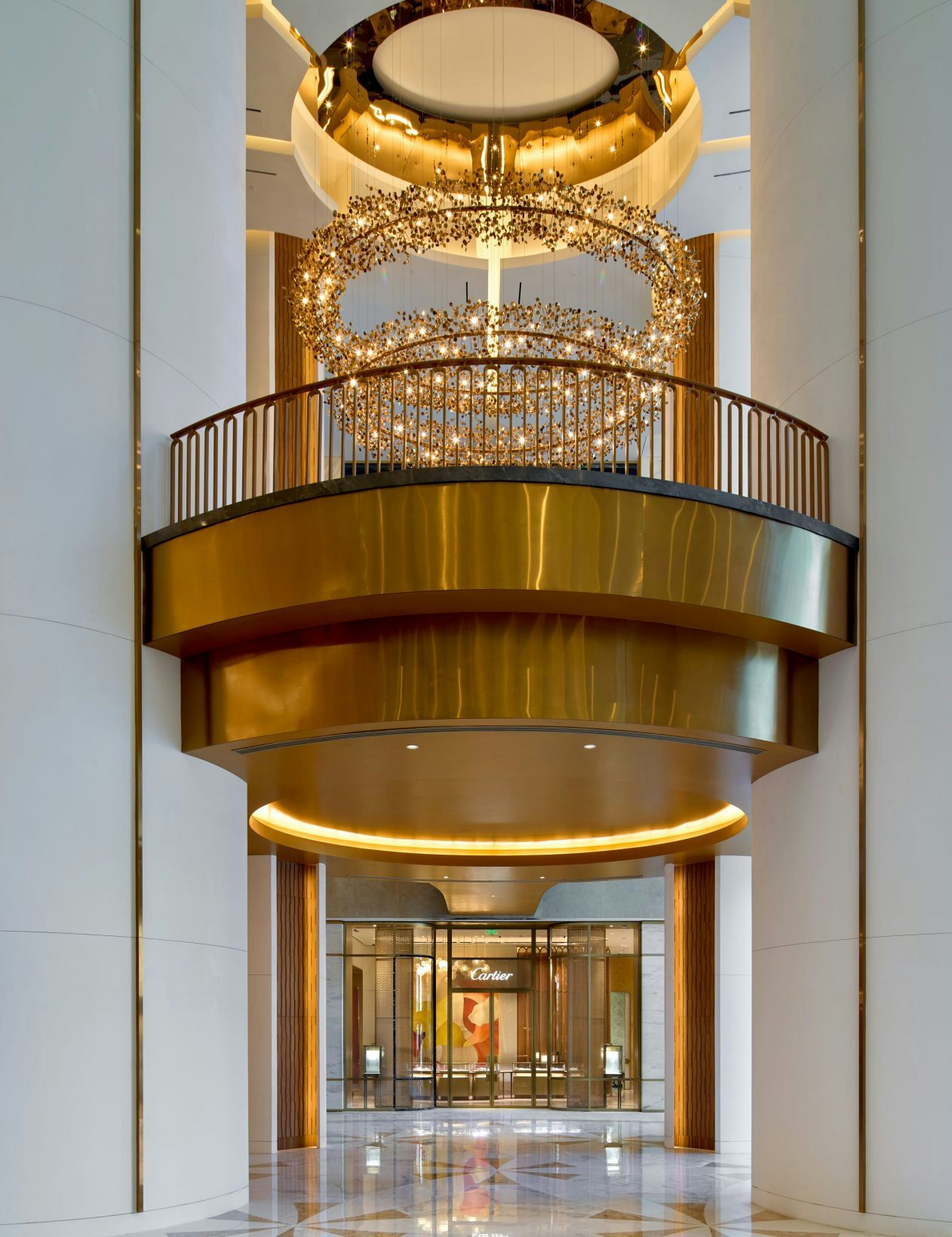
In Mumbai, the largest luxury shopping center in India, Jio World Plaza (JWP), opens its doors.
Owned by Reliance Industries Ltd – a company chaired by Mukesh Ambani, Asia’s richest man – the Jio World Plaza (JWP) shopping center has just been inaugurated in the business district of Bandra Kurla Complex (BKC).
Newsletters
Cet article vous plaît ?
Inscrivez-vous à nos newsletters pour recevoir les dernières publications et analyses selon nos 4 thématiques: